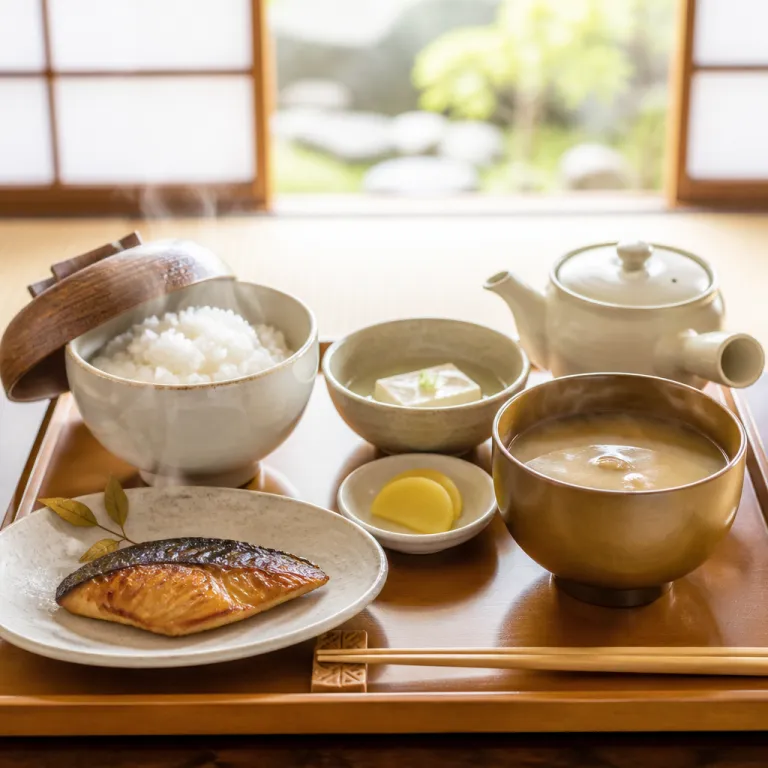
Why the ryokan breakfast shapes how you remember an onsen stay
The quiet drama of a ryokan breakfast in Japan begins before you sit. After your first onsen soak, steam still in your hair, you step from tatami room to dining room and the morning light sharpens every lacquered tray and porcelain bowl. This is where the promise of a Japanese hot spring inn breakfast, built around regional ingredients and local cooking, moves from brochure copy to something you will measure every future ryokan stay against.
Unlike a hotel buffet, this traditional Japanese morning meal arrives as a composed multi course experience. A server slides open the shoji, bows, and sets down a tray that often holds a generous spread of small dishes. Many ryokan sample menus published by Japanese inns list rice, miso soup, grilled fish, pickles and several side plates, sometimes approaching ten separate components. Each piece of food is deliberate, from the grilled fish to the miso soup, and the balance of soup, rice, protein and side dishes reflects a cultural logic that treats breakfast as the foundation of the day rather than a rushed refuel.
For travelers planning a Japan trip focused on hot springs, this first meal quietly reveals whether an onsen ryokan truly understands its region. The room rate at luxury Japanese inns almost always includes both kaiseki dinner and breakfast, yet guests often remember the morning meal more vividly than the elaborate evening course. That is why any serious comparison of ryokan stays should weigh the quality of breakfast meals included just as carefully as the artistry of the kaiseki dinner served the night before.
From kaiseki dinner to morning tray: different logic, same precision
Even at the most refined Japanese inn, the rhythm of dining shifts dramatically between night and morning. The kaiseki dinner is a staged performance, a multi course sequence where seasonal ingredients arrive one by one, often explained in detail and sometimes paired with sake. By contrast, the morning tray at a traditional hot spring inn is about presenting the region in a single, harmonious tableau that lands on your table all at once.
Think of kaiseki as narrative and breakfast as landscape, both rooted in traditional Japanese technique. At night, grilled, simmered and steamed dishes appear in a carefully timed arc, as explored in depth in guides to what arrives when and why every course matters in a classic kaiseki structure. In the morning, the same kitchen and the same chefs redirect their expertise toward balance, temperature and texture, ensuring that rice, miso soup, pickles, protein and vegetable dishes can all be eaten in any order without one element overwhelming the others.
For travelers comparing destinations in Japan, this distinction matters when choosing between rooms and ryokans. A property may advertise elaborate meals at the ryokan, yet the true test is whether both meals, dinner and breakfast, feel equally anchored in local seasonal ingredients and traditional methods. When a ryokan stay delivers a breakfast that feels as considered as the evening meal, guests often leave with a deeper sense that their trip has engaged with real Japanese food culture rather than a staged performance.
Regional signatures: how breakfast maps the onsen landscape
Move north to south across Japan and the breakfast tray redraws itself with every region. In Hokkaido, a ryokan breakfast in a hot spring town such as Noboribetsu Onsen or Jozankei might feature thick cuts of grilled salmon, local dairy and butter served alongside rice, and miso soup enriched with seafood rather than simple tofu. Travel to Tohoku and the same traditional Japanese format leans into mountain vegetables, wild greens and assertive tsukemono pickles that speak to a colder climate and a history of preservation.
On a Kyushu onsen trip in places like Beppu or Yufuin, guests often wake to mentaiko, the spicy cod roe that appears as both centerpiece and side dish, plus dashimaki tamago rolled omelette and rich pork based soups. Shikoku breakfasts, by contrast, might highlight citrus dressed dishes, local sea bream and rice cooked in clay pots, the fragrance filling the dining room before the trays even arrive. Across these destinations in Japan, the constant is the structure of the meal, but the ingredients, dishes and even the style of soup shift to mirror the surrounding landscape and the partners in the supply chain, from local farmers to fishmongers.
For guests booking premium rooms at an onsen ryokan, these regional signatures are not decorative details; they are the point. A ryokan stay that serves anonymous grilled fish and generic miso soup at breakfast, regardless of region, is missing the opportunity to turn the morning meal into a map of local seasonal food. When you evaluate room rate and person night pricing, it is worth asking how deeply the breakfast meals included engage with the specific terroir of that particular Japanese style inn.
Morning baths, timing and the quiet choreography of the tray
The most memorable ryokan breakfasts are not only about what is on the tray but when it appears. At many Japanese inns, the day is structured around a sequence that runs bath, then breakfast, then another bath, with the onsen acting as both prelude and encore to the meal. This choreography is so central that some properties now share detailed guidance on why the early morning soak, around six, is the real golden hour for an onsen ryokan experience.
Timing matters because traditional Japanese breakfast dishes are at their best within a narrow window. Rice is cooked to be eaten immediately, miso soup loses aroma as it cools, and grilled fish dries quickly if left waiting in the room. When you choose a breakfast slot between roughly 6:30 and 9:00, you are not just picking a convenient time; you are aligning your own rhythm with the kitchen’s, allowing the chefs and servers to deliver each meal at peak temperature and texture.
For couples on a Japan trip, this means treating breakfast as a fixed point rather than something to drift into after a late night. A well run hotel style property might offer flexible hours, but the best ryokans still encourage guests to commit to a specific time so the dining room can move in quiet unison. When you respect that schedule, the story of breakfast at a Japanese hot spring inn feels seamless, from the first step into the steaming bath to the last sip of soup back in your room or in the shared dining space.
Tradition versus western style plates: what modern couples should choose
As international guests have filled more rooms, the debate over western style breakfast options at ryokans has sharpened. Some Japanese inns now offer eggs, toast and coffee alongside the traditional tray, positioning these dishes as a gentle bridge for travelers unused to rice and grilled fish in the morning. Others argue that too much accommodation risks eroding the very traditional Japanese experience that makes an onsen ryokan distinct from a standard hotel.
For a couple planning a first ryokan stay, the choice is less about comfort and more about intent. If your goal is to understand how regional food shapes daily life in Japan, then leaning into the full tray, with all its unfamiliar side dishes and soups, is the more honest route. Many ryokan booking sites and tourism boards answer common questions in similar terms: “What is a typical ryokan breakfast? A traditional meal with rice, miso soup, grilled fish, and pickles.” “Are Western-style breakfasts available at ryokans? Some ryokans offer Western options; inquire in advance.” “How do regional differences affect ryokan breakfasts? Local ingredients and specialties influence the menu.”
From a practical standpoint, the safest strategy is to inform the ryokan of any dietary restrictions in advance, then say yes to everything that appears on the tray once you arrive. Most meals at the ryokan are designed as complete multi course compositions, whether served in the room or in a shared dining room, and picking only familiar items can unbalance the meal. When you allow the chefs and ryokan staff to guide you through both dinner and breakfast sequences, the narrative of a Japanese inn breakfast becomes one of trust, not compromise.
Onsen gastronomy tourism and how to read breakfast when you book
Japan’s growing focus on onsen and gastronomy tourism has formalized what seasoned travelers already sensed; the strongest hot spring destinations in Japan are those where the bath and the table speak the same regional language. For couples browsing luxury ryokan stays online, this means reading breakfast descriptions as closely as you read the onsen facilities list. A property that highlights local seasonal ingredients, traditional cooking tools like charcoal grills and clay pots, and partnerships with nearby farmers is signaling that breakfast is central to its identity, not an afterthought.
When comparing room rate and person night pricing, pay attention to how meals included are framed. Some onsen ryokans emphasize only the evening kaiseki, while others describe both the kaiseki dinner and the morning meal with equal care, sometimes specifying the number of dishes, the style of miso soup and the regional fish used. The more precise the language around breakfast, the more likely you are to encounter a morning spread that feels rooted in place rather than copied from a template.
As you refine your Japan trip, treat breakfast photos and menus as a filter for authenticity. Look for mentions of traditional Japanese style trays, local vegetables, regional pickles and variations in dishes between seasons, all of which suggest that the meals at the ryokan are evolving with the landscape. In a world where many hotels can replicate similar rooms and amenities, it is often the quiet, early morning meal that will define the ryokan you remember long after the steam from the last onsen bath has faded.
FAQ
What should I expect from a traditional ryokan breakfast?
You can expect a tray served meal built around rice, miso soup, grilled fish and an array of small side dishes. The total number of items often approaches ten, including pickles, vegetables and sometimes a small hot pot or steamed egg. Everything is designed to be eaten together, creating a balanced start to your day at the onsen.
Are western style breakfast options common at onsen ryokans?
Western style options such as eggs, toast and coffee are increasingly available, especially at larger or more international focused ryokans. However, they may be simpler than the traditional Japanese tray and sometimes need to be requested in advance. If breakfast is important to your trip, it is wise to ask about both styles when you book your room.
How do regional differences in Japan affect ryokan breakfasts?
Regional differences shape almost every element of the breakfast, from the type of fish to the vegetables and pickles. Coastal areas might emphasize seafood, while mountain regions lean into preserved vegetables and hearty soups. These variations mean that breakfast can be one of the most vivid ways to experience local food culture during a ryokan stay.
Is breakfast usually included in the room rate at a ryokan?
At most traditional ryokans, both dinner and breakfast are included in the room rate, calculated per person per night. This structure allows the property to plan multi course meals around seasonal ingredients for every guest. When comparing prices, always check whether meals are included so you can make a fair comparison between different inns.
How should I handle dietary restrictions at a Japanese inn?
The most important step is to inform the ryokan of your dietary restrictions well before arrival, ideally at the time of booking. Many Japanese inns can adjust specific dishes or ingredients if they have enough notice, especially for allergies. Once you are there, communicate clearly with staff and be prepared that some highly traditional dishes may not be easily modified.