Reading the rhythm of arrival at a japanese ryokan
Arrive at your first ryokan stay before the light fades. In Japan the invisible script of a traditional Japanese inn starts long before dinner, and your timing will shape every part of the experience. For a first time guest, treating arrival as a slow ritual rather than a simple hotel check in transforms the entire ryokan stay.
Most Japanese ryokans welcome guests from around 15:00, and many expect you settled before the typical 18:00 dinner hour. Regional tourism offices and the Japan National Tourism Organization (JNTO) note that individual properties may open check in slightly earlier or later, so always confirm when you book. When you step inside, remove your shoes at the threshold, slip into the small slippers provided and let the ryokan staff guide you in quiet English or gentle Japanese. This first contact sets the tone; the ryokan will read your pace, your curiosity and how much cultural guidance you want during the stay.
Your nakai, the room attendant, leads you to a tatami room that looks almost empty at first glance. She will slide open shoji doors, point out the onsen bath hours, explain where to hang the yukata and show how the local onsen tax is settled at checkout, which can differ slightly by town or prefecture according to municipal rules. Accept the welcome sweets and Japanese tea as part of the ceremony, because this is not a snack but the opening act of experiencing Japan through hot water, silence and attentive service.
While you sip the hot Japanese tea, listen as the nakai sketches the timeline of your stay. She will confirm what time you prefer dinner, when the onsen bath is less crowded and how late the public hot springs remain open for quiet soaking, which varies by property and season. This is the moment to mention dietary needs, ask about tattoo policies or request extra onsen towels, since the ryokan staff are the key actors dedicated to guest comfort and cultural education.
Wearing the yukata and moving through shared spaces
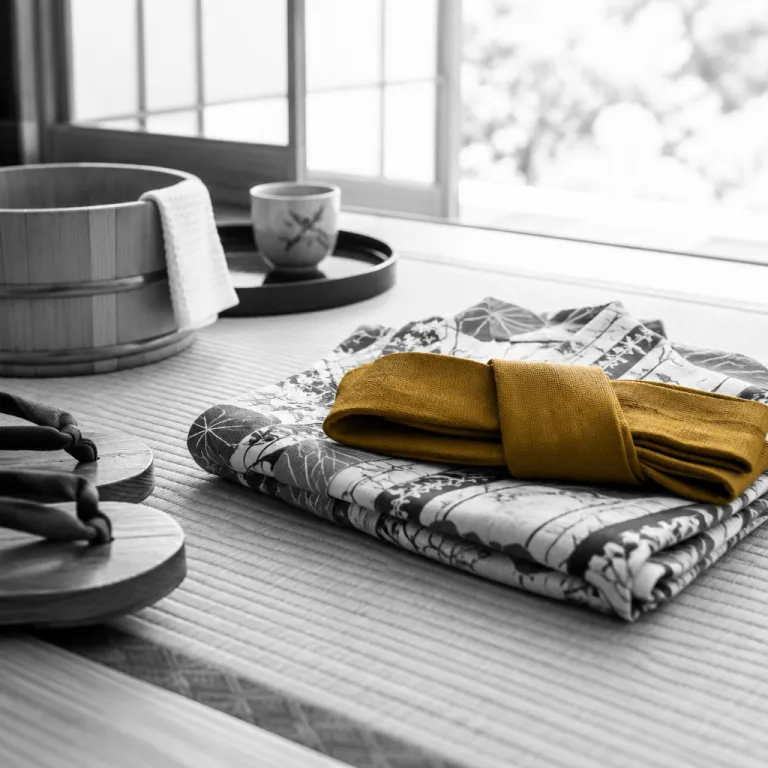
The yukata waiting in your room is more than loungewear. In a Japanese ryokan it signals that you are part of the house, and understanding its etiquette will keep your first time stay from feeling like a costume party. Wrap the left side over the right, because right over left is reserved for the dead in traditional Japanese custom.
Most ryokans encourage guests to wear the yukata everywhere inside, from corridor to onsen to dinner, though a few higher end properties may prefer smart casual clothes in certain dining rooms. You can travel Japan in your own clothes of course, yet slipping into Japanese style cotton robes softens the line between private room and shared bath. If you feel shy, start by wearing the yukata only to the onsen bath, then later to the kaiseki dinner once you find your rhythm.
Slippers are another quiet code in experiences of Japan that focus on shared spaces. Use the standard slippers on wooden floors, switch to toilet slippers in restrooms and step barefoot or in socks on tatami inside your room. When you walk to the onsen ryokan baths, leave slippers neatly at the entrance, because the path from changing area to hot spring is meant for bare feet and calm minds.
In corridors after 21:00, voices drop and phones stay on silent to respect the unspoken sound rule. This is when the whole Japan travel dream of a peaceful onsen ryokan becomes real, as only the soft shuffle of yukata and the distant rush of onsen water remain. Many baths are gender separated, with men’s and women’s areas marked by blue and red curtains, while a few regions still maintain mixed konyoku baths or offer private family tubs that can be reserved. If you are unsure about tattoos in shared baths, read a focused guide such as how onsen are quietly redrawing the line on body art before you book through reservation sites, because rules differ widely between regions and individual inns.
Bathing etiquette in onsen water for the first time
The onsen is the heart of any onsen ryokan, and etiquette here matters most. Japanese hot springs are not private spa tubs but shared baths where your behaviour shapes every guest’s experience. Think of this as the core chapter in any first ryokan stay guide etiquette, because the water is older than the building and deserves respect.
In the changing room, undress completely and place your clothes in a small basket or locker, keeping only the modesty towel. Step into the washing area first, sit on the low stool and wash thoroughly with soap and onsen water before you even touch the main bath. This pre wash is non negotiable in Japan travel culture, since the onsen bath itself is for soaking clean bodies, not for basic hygiene.
When you approach the hot spring pool, test the temperature slowly with your hand or foot. Onsen water can be very hot, especially in traditional Japanese baths that honour the source, so ease in gradually and keep your small towel out of the water, folded on your head or placed on the edge. Never wring the towel into the bath, because that breaks the shared trust that makes Japanese onsen culture work.
Soak quietly, keep conversations low and leave phones in your room to protect the stillness that regulars cherish. Some ryokans that accept tattoos may ask guests to cover small designs with skin coloured stickers, while others direct tattooed visitors to private onsen or time slots reserved for exclusive use. If you are interested in the deeper culture of long soaks and healing routines, read about toji traditions in pieces like what toji taught Japan about healing in hot springs before you travel Japan for extended stays. Respecting these customs is a form of sustainable travel, because it preserves the social fabric around hot springs as carefully as the environment itself.
Dinner, futon service and the quiet choreography of the night
Back in your room, the evening follows a precise yet gentle script. Dinner at a Japanese ryokan is usually served around 18:00, and the kitchen runs on a fixed schedule that keeps each hot dish at the right temperature. Local tourism boards and JNTO note that some inns offer later sittings, but within a narrow window, so confirm your slot at check in. If you wander off to the onsen and return late, the ryokan staff will still feed you, but the timing and flow of the meal may feel slightly off.
Most onsen ryokans serve kaiseki style dinners in the room, turning your tatami space into a private restaurant. Courses arrive in a careful order that balances local seafood, seasonal vegetables and sometimes onsen water simmered dishes, and your nakai explains each plate in simple English or soft Japanese. For a deeper look at why the sequence matters, study a dedicated guide such as what arrives when and why every course matters in kaiseki before your first time stay.
While you eat, another team quietly prepares your futon in the same room, laying thick mattresses directly on the tatami. There is no need to tip, because “Is tipping expected at a ryokan? No, ryokans provide toiletries.” reflects the broader norm that service is already built into the rate. When you return from a final onsen bath, the room has transformed into a sleeping space, and the faint scent of tatami and hot springs lingers in the air.
In the morning, fold back your futon lightly or leave it as is, depending on house style, and open the shoji to let in pale light. Breakfast times are usually fixed, so check with the front desk or your nakai to find the slot that fits your Japan travel plans. Keeping to these rhythms shows respect for the Japanese traditional hospitality that keeps small family run ryokans viable in an era of fast reservation sites and rushed travel.
Checking out, paying onsen tax and choosing better reservation sites
Departure from a Japanese ryokan is as choreographed as arrival, only quieter. Check out times usually fall around 10:00, giving staff enough time to air the room, roll away futons and reset the space for the next ryokan stay. JNTO and prefectural tourism sites note that some properties extend checkout to 11:00, but earlier departures remain the norm. When you settle the bill at the front desk, you will often see a separate line for the modest onsen tax that supports local hot spring maintenance, with the exact amount set by the municipality and published on local government pages.
Cash remains useful in many hot spring regions of Japan, especially at smaller ryokans that prioritise tradition over technology. Larger onsen ryokan properties increasingly accept cards and show clear English explanations of charges, including the per person onsen tax. Either way, tipping is not customary, so a sincere bow, a quiet “arigatou gozaimasu” and punctual checkout time are the correct farewell gestures.
For future experiences in Japan, choose reservation sites that specialise in Japanese ryokan stays rather than generic hotel platforms. These curated services usually explain room types, shared bath layouts and whether tattoos are accepted in the onsen bath, which matters for many international guests. They also highlight properties that invest in sustainable travel practices, from careful onsen water management to support for local farmers who supply the kaiseki kitchen.
As interest in cultural immersion grows and more international guests travel Japan for hot springs, the invisible script of the ryokan stay becomes even more valuable. Learning this first ryokan stay guide etiquette before you go protects the calm of existing guests and helps small communities keep their Japanese traditional inns thriving. In return, the ryokan will give you something no standard hotel can match; a stay where every shared bath, every cup of Japanese tea and every bow at the door feels like part of a living, breathing culture.
FAQ
Do I need to bring my own toiletries to a japanese ryokan?
You do not need to bring basic toiletries for a standard ryokan stay. Most ryokans provide soap, shampoo, conditioner and sometimes skincare in both the room and the onsen bath area. If you prefer specific brands, pack travel sizes, but expect the essentials to be waiting when you arrive.
Is tipping expected during my stay at an onsen ryokan?
Tipping is not expected at a Japanese ryokan, even in luxury properties. Service is considered part of the overall experience and is already reflected in the room rate and the cost of meals. If you feel deeply grateful, a handwritten note in simple English or Japanese is more appropriate than cash.
Can I wear my own clothes instead of the yukata provided?
You may wear your own clothes inside your room and around the property if that feels more comfortable. However, wearing the yukata in corridors, at dinner and on the way to the hot springs helps you blend into the traditional Japanese atmosphere. Many first time guests start in their own clothes, then gradually adopt the yukata as they relax into the stay.
What is the typical cost and timing for a first time ryokan stay?
A standard Japanese ryokan stay with dinner and breakfast often starts around 15 000 JPY per person per night, with luxury onsen ryokan options costing more depending on region and season. Tourism surveys and JNTO examples show that mountain resorts and famous hot spring towns can be higher, while simple minshuku style inns may be lower. Check in usually begins mid afternoon, dinner is served around 18:00 and checkout is around 10:00 the next morning. These fixed times allow the small teams of ryokan staff to maintain high service levels and carefully manage the onsen water and shared spaces.
How can I be sure I am following correct onsen etiquette?
Focus on three essentials; wash thoroughly before entering the bath, keep your small towel out of the onsen water and speak softly in the bathing area. Observe what local guests do, from where they place slippers to how they rinse the stools and buckets after use. When in doubt, ask the front desk or your nakai in simple English, because they are used to guiding international visitors through their first time onsen experience.