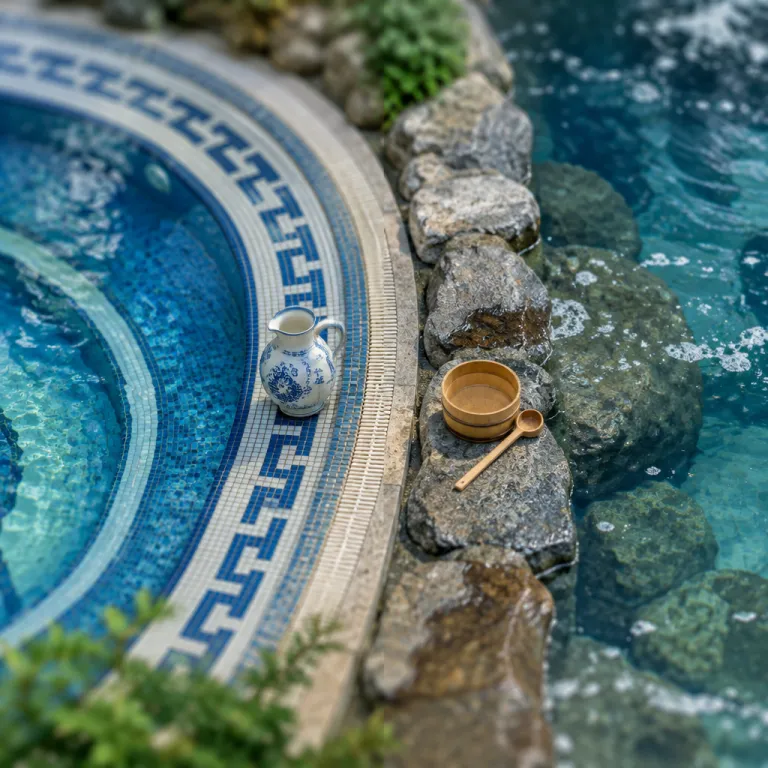
Two countries, one need: why hot mineral water keeps calling us back
Step into any of Hungary’s grand thermal baths and you feel the same human need that pulls travelers toward a quiet Japanese onsen. The hungary thermal baths tradition and Japan’s hot spring culture both answer a shared impulse for stress relief, social bonds, hygiene, and health, yet they stage that impulse in strikingly different ways. When you plan a baths visit in Budapest after soaking in a mountain rotenburo in Japan, you start to see how two societies solve the same question of how to slow down together in hot mineral water.
Hungarian society has turned geothermal springs into civic living rooms, while Japanese society has woven onsen and sentō into a ritual of purification and seasonal rhythm. Both cultures sit on generous geothermal resources, with more than 1 300 Hungarian thermal springs mapped across the country and thousands of onsen sources in Japan, so the thermal bath is not a novelty but a daily possibility. For travelers visiting Budapest after touring rural ryokan, the contrast between a lively budapest thermal bath hall and a hushed hinoki tub in Tōhoku is not about which is best, but about how each reflects its own idea of community and care.
Do Japanese and Hungarians use baths for healing? Yes. Hungary offers medicinal treatments; Japan offers touji onsen therapy. Are social functions similar? Yes. Both cultures use baths as community gathering places. Is ritual involved? Pronounced in Japan via purification; subtler in Hungary historically religious then social.
Budapest’s great bath houses: architecture, atmosphere, and the pleasure of staying a while
Walk into Széchenyi, the vast neo baroque complex in Budapest’s City Park, and the first impression is scale rather than silence. The famous outdoor pools steam on cold winter mornings, with locals playing chess at the edge of the hot water while visitors circle slowly between one thermal bath and the next. If you are used to a compact Japanese inn where the rotenburo holds a handful of guests, the sheer size of these budapest baths feels almost theatrical.
Széchenyi baths anchor many first time hungary thermal baths itineraries, and for good reason, since the yellow façades and colonnades frame some of the best outdoor pools in Europe. Inside, a maze of indoor pools offers different thermal temperatures, saunas, and steam rooms, so your baths visit becomes a slow circuit rather than a single soak. Regulars bring flip flops, swim caps, and their own towels, and they treat the place less like a spa and more like a social club, lingering between each pool to talk, read, or simply watch the flow of visiting Budapest life.
Across the river on the Buda side, Gellért baths show another face of budapest thermal culture, with Art Nouveau mosaics, stained glass, and a more intimate sequence of pools. Here the indoor main pool feels almost like a cathedral nave, while side rooms hold hotter thermal baths where the mineral rich water is used for prescribed treatments as well as leisure. If you enjoy elegant onsen stays in Takayama, such as those described in this guide to refined hot spring travel in Japan’s mountains, you will recognize the same pleasure in moving slowly through beautiful architecture shaped entirely around water.
From Ottoman domes to rooftop hot pools: Rudas, Veli Bej, and the Turkish layer
While Széchenyi thermal pools dominate many postcards, the older Ottoman era bath houses reveal another dimension of hungary thermal baths culture. Rudas, on the Buda side beneath Gellért Hill, centers on an octagonal pool under a low stone dome pierced by star shaped skylights, where the light falls in shafts of steam that feel closer to a Japanese mountain onsen than to a city spa. Around the main pool, smaller hot and cooler pools let you move through different temperatures in a way that will feel familiar if you have practiced careful temperature steps in Japanese baths.
Rudas thermal traditions date back to the Ottoman period, and the building still offers single sex days that echo older bathing customs, while mixed days with swimsuits reflect contemporary visiting Budapest expectations. Above the historic core, a rooftop hot pool looks across the Danube toward Pest, turning the bath into a lookout as much as a place of immersion, and this layering of history and city view is something Japanese rural inns rarely attempt. Nearby, Veli Bej offers another restored Turkish bath, quieter and more contemplative, where the central pool and surrounding thermal baths create a rhythm of movement that onsen travelers will understand immediately.
For guests who love intimate Japanese inns such as Hanaougi Bettei Iiyama in Takayama, reviewed as an elegant stay in Japan’s hot spring heartland, these smaller budapest thermal bath houses may feel closer in spirit than the grander complexes. You still buy tickets, you still move from pool to pool, yet the focus shifts from spectacle to the sensation of hot mineral water against stone. In both cultures, the architecture bends around the pools, and the pool in turn shapes how people talk, sit, and share time.
Etiquette and atmosphere: swimsuits, silence, and how to share the water
For travelers arriving from Japan’s onsen regions, the first surprise in hungary thermal baths is visual, because almost everyone wears swimsuits. In Japanese hot spring inns, nudity, quiet, and a clear sequence of washing before entering the pool are non negotiable, while in Budapest baths the etiquette is looser, more social, and more forgiving of conversation. You still shower before entering any thermal bath, but the mood in a busy budapest thermal complex is closer to a public park than to a temple.
At Széchenyi baths and Gellért baths, you will see groups of friends talking across the water, couples leaning against the pool edge, and solo bathers drifting between pools with their flip flops tucked under a bench. The soundscape is a low murmur rather than the near silence of a Japanese rotenburo, and for some onsen purists this can feel distracting at first. Yet the same basic respect applies, because you avoid splashing, keep phones away from the water, and give others space, just as you would when you visit a quiet mountain spa in Japan.
In Japan, the emphasis on purification means you scrub thoroughly before entering any pool, and many rural inns still separate men and women, while mixed bathing survives only in a few regions. In Hungary, mixed pools are the norm, and the focus leans more toward the medicinal and social benefits of thermal baths than toward ritual purity, even though historical religious influences still echo faintly in some older Turkish bath spaces. For travelers planning to visit Budapest after a Tōhoku onsen route, such as this northern soaking season itinerary, the key tips visiting both cultures are simple ; wash carefully, move calmly, and let the local rhythm guide your pace.
What feels familiar, what feels foreign: an onsen traveler in Budapest
If you already love Japanese hot spring inns, the first familiar note in hungary thermal baths will be the smell and feel of the mineral rich water. Both countries draw from geothermal springs, and both trust that hot water, time, and repetition can ease joints, calm the nervous system, and create a subtle sense of reset. The difference lies less in the water itself and more in how Hungarian and Japanese societies choreograph the hours around each pool.
In Budapest, you buy tickets at a counter that feels closer to a municipal pool than to a ryokan reception, then navigate corridors to find your chosen pool, sauna, or hot tub. The experience is modular and flexible, so you can spend an hour between meetings or an entire winter afternoon drifting between indoor and outdoor pools, and this suits independent travelers who like to shape their own baths visit. In Japan, by contrast, the onsen stay is usually wrapped into a full hospitality experience, with kaiseki dinner, tatami room, and set bathing times that frame your day.
Yet certain gestures bridge the gap, such as the quiet moment when you lower yourself into a hotter pool and feel your breathing slow, whether you are in a small buda side Turkish bath or a cedar lined rotenburo in the Japanese Alps. Both cultures encourage you to pay attention to temperature, to listen to your body, and to treat the thermal bath as something you return to repeatedly rather than a one off thrill. For travelers who value this rhythm, hungary thermal baths become another chapter in a global bathing life, not a detour from Japanese onsen but a parallel path.
Enduring traditions and what each culture can teach the other
Hungary and Japan have carried their bathing traditions from ancient times into the present, adapting them to modern health systems, tourism, and changing ideas of leisure. Hungarian thermal baths have integrated medicinal treatments into public healthcare, so a visit to a spa like Széchenyi or Gellért can be both a prescribed therapy and a social outing, while Japan’s touji culture frames longer stays at onsen towns as a way to heal slowly. Both approaches show how geothermal water can move beyond simple relaxation into a deeper form of care.
For Japanese onsen travelers, Budapest’s openness and sociability offer a reminder that hot water can be a place for conversation as well as contemplation, especially in large outdoor pools where winter steam softens the city skyline. For Hungarian bath regulars, Japanese attention to quiet, to pre bath washing, and to the design of small, carefully framed pools suggests another way to heighten awareness of each moment in the water. Neither model is the best in any absolute sense, but each reveals a different answer to the same human question of how to share heat, time, and space.
As health tourism rises in Hungary and ryokan reinvention accelerates for foreign guests in Japan, both cultures face similar pressures to package their baths for global visitors without losing their core character. The most thoughtful hungary thermal baths and the most attentive Japanese inns manage this by keeping the water and the pool at the center, letting architecture, tickets, and services orbit quietly around them. For travelers choosing where to book their next stay, the decision is not between Budapest baths or Japanese onsen, but how to weave both into a lifetime of returning to hot mineral water whenever the world feels too fast.
Key figures behind two bathing cultures
- Hungary counts more than 1 300 identified thermal springs, which underpins the density of budapest baths and regional spa towns across the country (Hungary Thermal Bath Culture, national survey data).
- Japan has around 2 300 recognized onsen facilities drawing from natural hot spring sources, showing how deeply hot spring bathing is embedded in Japanese daily life and travel (Japan Onsen Hot Springs, national tourism data).
- Budapest’s bath houses recorded around 5 000 000 visits in a recent pre pandemic year, highlighting how central budapest thermal culture is to both residents and international visitors (Urban wellbeing Budapest, municipal statistics).
- Health tourism has grown steadily in Hungary, with thermal baths and medicinal spas forming a key pillar of regional development strategies, especially around Budapest and western spa towns.
- In Japan, the number of traditional inns offering onsen experiences has remained high even as they modernize facilities, reflecting strong domestic demand for seasonal hot spring travel.
FAQ about Hungary’s thermal baths and Japanese onsen
How do Hungary’s thermal baths differ from Japanese onsen in daily use ?
Hungary’s thermal baths, especially in Budapest, function as large civic spaces where people come for socializing, low intensity exercise, and medicinal treatments, often wearing swimsuits in mixed gender pools. Japanese onsen are usually quieter, more ritualized, and often attached to inns, with strict washing etiquette and a stronger emphasis on contemplation. Both serve everyday needs, but Hungarian baths feel more like public parks, while Japanese onsen feel closer to small sanctuaries.
Is the healing role of hot springs similar in Hungary and Japan ?
Both countries attribute therapeutic value to their geothermal water, but they integrate it differently into healthcare and travel. Hungary’s thermal baths often work directly with medical professionals, offering prescribed treatments for musculoskeletal issues within public or insurance supported systems. Japan’s touji tradition encourages longer stays at onsen towns for gradual recovery, blending medical advice with lifestyle changes and seasonal bathing.
What should an onsen accustomed traveler know before visiting Budapest baths ?
Expect swimsuits, more conversation, and a wider range of facilities, from large outdoor pools to saunas and steam rooms, all accessed with tickets purchased at the entrance. You should still wash before entering any pool, move calmly, and respect personal space, but silence is not required in the same way as in many Japanese baths. Bringing flip flops, a towel, and a willingness to share space with families and groups will make your visit Budapest experience smoother.
Are Budapest’s Turkish style baths comparable to Japanese traditional baths ?
Budapest’s Turkish bath houses such as Rudas and Veli Bej share with Japanese onsen a focus on stone, shadow, and the sensory experience of hot water in relatively simple pools. The Ottoman domes and star shaped skylights create a different visual language from Japanese cedar and rock, yet both aim to frame the water rather than distract from it. For travelers who appreciate older Japanese bath houses, these buda side thermal baths often feel like the most atmospheric places to spend unhurried time.
Can one trip combine Budapest thermal baths and Japanese onsen experiences meaningfully ?
Yes, many travelers now weave a European city break around budapest thermal culture into a longer pattern of Asian hot spring journeys. Experiencing Széchenyi baths, Gellért baths, and a smaller Turkish bath in the same year as a Tōhoku onsen route or a Takayama inn stay reveals how different societies shape the same basic act of sharing hot water. Over time, this comparative perspective deepens your understanding of both cultures and helps you choose where to book your next stay based on mood rather than hierarchy.