Section 1 – What accessible onsen in Japan really means today
Accessible onsen in Japan is no longer a niche promise whispered in brochures. Across the country, inn owners quietly rework entrances, corridors and baths so that a guest using a wheelchair or cane can reach the water with dignity. The result is a new generation of hot spring stays where access is designed in from the ground floor to the rooftop deck.
When Japanese hosts talk about barrier free or “bariafuri”, they mean more than a ramp at the front door. A truly accessible area will combine a step free path from the station or parking, wide doors, an elevator that reaches every floor and clear routes into both public and private baths. For many wheelchair users, this is the difference between watching steam from the lobby and actually sliding into a hot spring bath room that feels welcoming rather than improvised.
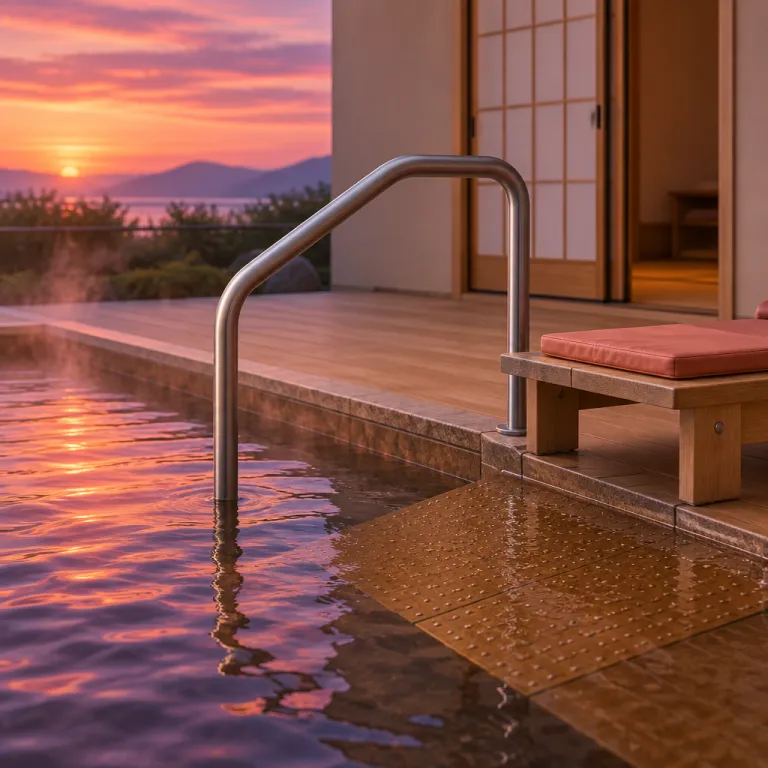
Look closely at the bath itself, because this is where accessible onsen in Japan either works beautifully or fails. An accessible bath will have low thresholds, non slip tiles, grab bars at multiple heights and often a shower chair or transfer bench ready beside the washing zone. Staff who understand how to guide a guest safely from chair seating to water level can matter as much as any piece of hardware.
Section 2 – Barrier free design: from entrance steps to the bath edge
For travelers comparing accessible onsen in Japan, the first question should be simple : can you move from arrival to your room without a single unexpected step. A genuinely barrier free route starts at the curb, continues through automatic doors and keeps corridors wide enough for a wheelchair to turn without scraping walls. When an inn adds a compact elevator instead of relying on stairs, it changes who can stay on upper floors and still reach the baths.
Inside the guest rooms, details reveal whether accessibility was an afterthought or a design principle. An accessible room will usually sit on or near the ground floor, offer a room bath or at least a wet room style bath room and provide grab bars near both toilet and tub. Some properties also keep a shower chair on request, which can be essential for wheelchair users who cannot stand safely on a wet floor.
Shared facilities need the same care, especially where a public bath is the social heart of the inn. Look for step free entries into changing rooms, low benches for chair seating and clear signage showing which baths are most accessible. For a sense of how refined this can feel in practice, study the way a Hakone retreat such as a hillside hot spring hotel in Hakone separates quiet, elevator served floors from the main bathing level.
Section 3 – Why private and in room baths unlock real access
For many travelers exploring accessible onsen in Japan, the real breakthrough comes with kashikiri, the reservable private bath. A private bath allows a guest who needs assistance from a partner or caregiver to bathe without worrying about public etiquette or time pressure. When that private space is also step free, with grab bars and a shower chair, it becomes a genuinely accessible bath rather than just a romantic extra.
Families traveling with older parents or children who use a wheelchair often find that accessible rooms with a room private onsen are worth prioritizing over a larger suite. An accessible room with its own hot spring fed tub lets everyone bathe on their own schedule, adjust the hot water temperature and move at a safe pace. In some inns, the room bath is designed with a sliding door wide enough for a wheelchair, a low threshold and chair seating right beside the tub edge.
Certain towns have become quiet leaders in this shift, and Kinosaki Onsen is one of them. While the traditional image of Kinosaki Onsen focuses on strolling in yukata between public baths, a growing number of properties now offer accessible rooms and at least one room accessible bath for guests who cannot manage the cobbled streets. For a curated overview of refined, access conscious stays in that town, the guide to refined ryokan stays in Kinosaki Onsen is a useful starting point.
Section 4 – Choosing the right town: Tokyo, classic hot spring resorts and beyond
Location shapes how accessible onsen in Japan will feel over the course of a trip. In Tokyo, large hotels with in house hot spring style baths often lead on barrier free design, with elevators, wide corridors and accessible rooms as standard. These urban properties can be a smart first stop for wheelchair users who want to test how Japanese bathing works before heading into a smaller hot spring town.
Once you leave Tokyo, the picture becomes more varied, but also more rewarding. Established hot spring areas such as Hakone, Beppu or Noboribetsu now mix older inns with newer builds that treat barrier free design as a selling point, from step free lobbies to ground floor accessible rooms with private baths. When you read property descriptions, look for explicit mentions of accessible room layouts, public bath access and whether any free room upgrades are offered when a more suitable room is available.
Some of the most atmospheric stays sit in compact valleys where streets are steep and pavements narrow, which can challenge wheelchair users. In these towns, a room accessible bath or fully private onsen becomes more than a luxury, because it removes the need to navigate uneven streets after dark. If you are planning a longer circuit through several regions, the itinerary guide to a three week refined onsen journey across Japan shows how to balance urban convenience with classic hot spring scenery.
Section 5 – The questions to ask before you book an accessible onsen stay
Booking an accessible onsen in Japan requires more precision than choosing a standard hotel. Before you commit, email the property and ask for photos of the entrance, the elevator, the corridors and the bath room you are likely to receive. Clarify whether the route from lobby to your floor is fully step free, including any thresholds or slopes that might not appear in marketing images.
Next, focus on the bathing spaces themselves, because this is where many surprises hide. Ask whether the public bath has a step at the doorway, how steep the bath floor becomes near the edge and whether there are grab bars or railings at the entry point. If you rely on a wheelchair, confirm whether staff can provide a shower chair, whether there is chair seating in the washing area and whether a caregiver may enter the same gender space if assistance is required.
Private facilities deserve the same scrutiny, especially if you are paying a premium for a room private onsen. Request exact measurements of the door width into the room bath, the height of any lip around the tub and whether the hot spring water temperature can be adjusted if the default is too hot. Guests with pacemakers or other medical devices should also ask whether any bath uses electric massage features, while travelers with tattoos need to confirm whether both public baths and private baths are open to them without extra paperwork.
Section 6 – How Japanese inns are quietly widening access
The most interesting story about accessible onsen in Japan is not a single flagship project, but a slow, nationwide shift. As Japan’s population ages, inn owners realise that barrier free design is not only for foreign wheelchair users, but also for their own parents and long standing regulars. That awareness is reshaping everything from how many accessible rooms they build to where they place the hottest outdoor pools.
In practice, this means more ground floor rooms with step free terraces, more elevators retrofitted into older wings and more public baths with at least one clearly marked accessible bath entrance. Some properties now keep a small inventory of mobility aids such as shower chairs, portable grab bars and non slip mats, which can be brought to any room accessible enough to use them. Staff training is evolving too, with teams learning how to guide a guest safely without overstepping personal boundaries.
For families, these changes open up hot spring travel in ways that were unthinkable a decade ago. A multi generational group can now book an accessible room for grandparents, a standard free room for younger adults and still share time together in a semi private bath that everyone can enter. As more travelers share honest reviews about what worked and what did not, the most thoughtful inns are listening closely and adjusting each floor, corridor and bath to make accessible Japan feel less like an exception and more like the norm.
Key figures on accessible onsen and barrier free travel
- According to the Japan Tourism Agency, more than 25% of inbound visitors now include at least one traveler over the age of 60, which increases demand for step free access and chair seating in hot spring facilities.
- Government surveys on universal tourism report that roughly 40% of accommodation facilities in major cities such as Tokyo and Osaka now offer at least one accessible room, though the proportion is lower in traditional hot spring towns.
- Japan’s Ministry of Land, Infrastructure, Transport and Tourism has promoted barrier free renovation subsidies for small inns, leading to a steady rise in properties adding elevators, grab bars and ground floor accessible baths.
- Industry associations note that properties advertising barrier free or accessible bath features see higher occupancy among multi generational families, especially during peak domestic travel seasons.
FAQ about accessible onsen stays in Japan
Are there truly step free hot spring inns suitable for wheelchair users ?
Yes, a growing number of inns offer fully step free routes from entrance to rooms and baths, especially in larger towns and newly built properties. You should still confirm details directly, because older buildings may have small internal steps or narrow doors. Request photos and measurements of key areas such as the lobby, corridors, elevator and bath entrances.
How can I tell if a public bath will be accessible enough for me ?
Ask the property whether the public bath has level access, handrails and non slip flooring, and whether a shower chair is available. It also helps to know how deep the first step into the water is and whether there is a low bench or chair seating in the washing area. If the answers are vague, prioritise a room with a private bath where you control the environment.
Is a private onsen or an in room bath better for limited mobility ?
An in room hot spring bath usually offers the most control, because you can arrange grab bars, mats and assistance exactly as needed. Reservable private baths can also work well if they are close to your room and have step free access. In both cases, ask for photos of the door threshold, tub height and any available seating before you book.
Can I use an onsen if I have a medical device or tattoos ?
Many people with pacemakers or other devices can bathe safely, but you should avoid electric massage features and extremely hot pools unless your doctor approves. Tattoo policies vary by property, with some allowing tattoos in public baths and others directing guests to private baths only. Always check the inn’s rules in advance to avoid awkward conversations at check in.
What should families look for when booking an accessible onsen stay ?
Families should prioritise ground floor or elevator served accessible rooms, step free access to at least one bath and flexible chair seating in dining areas. A room private onsen or easily booked private bath makes it much easier to help children or older relatives without worrying about public etiquette. When in doubt, choose properties that clearly describe their barrier free features rather than relying on generic accessibility icons.