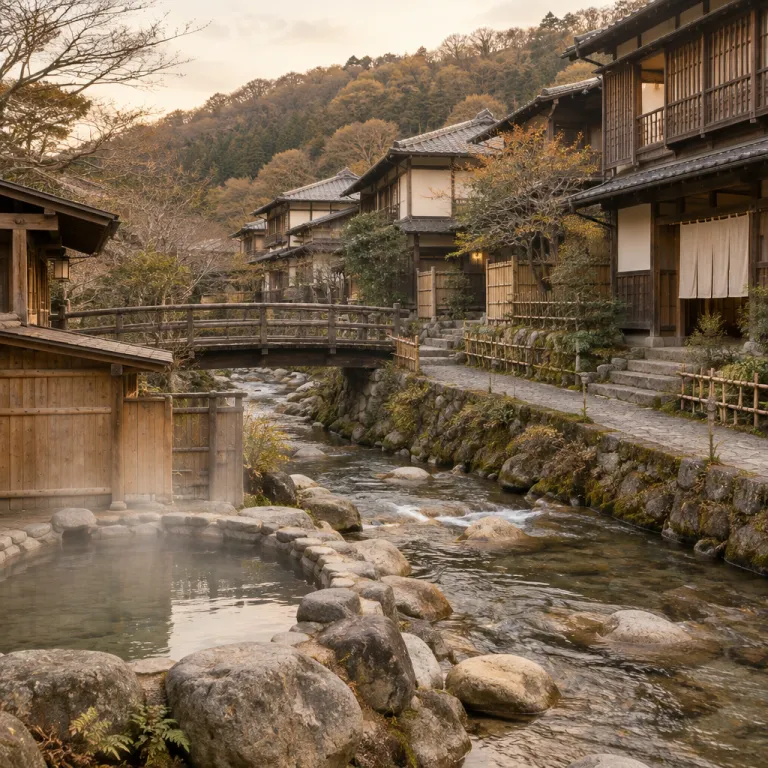
Why this onsen town feels so cohesive and quietly cinematic
Kurokawa sits in the highlands near Aso, yet the first impression is not volcanic drama but calm restraint. The onsen town agreed decades ago to limit neon, billboards and oversized logos, so the streets feel like a single thoughtfully designed stage set rather than a collage of competing brands. Wooden façades, low eaves and lantern light guide you through the town center, where the river cuts a soft curve between slopes of trees and steam from hot springs drifts across narrow bridges.
Walk slowly and you notice how every ryokan leans into the same language of dark timber, earthen walls and stone, while still protecting its own character behind noren curtains and garden gates. This shared aesthetic makes the entire spring town feel like one extended property, with individual ryokans acting as intimate wings rather than isolated hotels, and it is a key reason any serious kurokawa onsen guide treats architecture and streetscape as part of the bathing experience. The absence of garish lighting keeps the focus on the sound of the river, the smell of cedar and the glow from open air baths tucked below mossy retaining walls.
For couples planning a stay, this unity matters as much as the quality of the baths themselves. You move between gender separated indoor pools, outdoor baths along the river and private baths hidden in small courtyards, yet the visual language never jars, so the whole visit feels like one continuous onsen kurokawa narrative. Because the town is compact, you can cross from one side of Kurokawa to the other in minutes, but the layered paths, stairways and bridges make each day feel like a new route between hot spring sanctuaries.
How the wooden pass turns onsen hopping into a slow ritual
Any serious kurokawa onsen guide begins with the wooden nyuto tegata pass, which turns the entire town into a curated open air bath circuit. You buy this pass at the tourist office or participating ryokans in the town center, then choose three outdoor baths from dozens of hot springs scattered along the river and up the slopes. The pass hangs from your wrist or bag, and each bath visit is stamped into the wood, creating a tactile record of your onsen hopping day.
Because Kurokawa’s ryokan owners agreed to prioritize atmosphere over volume, the baths linked to the pass are rarely oversized or overlit, and many sit directly beside the river or in small forest clearings. Some outdoor bath options are mixed gender, others are gender separated, and several ryokans offer a private onsen or fully private baths that couples can reserve by the hour for a quieter experience. The pass encourages you to leave your own ryokan, walk through the town and engage with the wider onsen town community, rather than staying cloistered in a single property.
For travelers who already know design forward Japanese inns from places like the reimagined onsen ryokan described in this article on a contemporary property with Italian dining and in room record players, Kurokawa offers a different kind of luxury. Here the emphasis is not on concept restaurants but on the sequence of baths, the temperature of each hot spring and the way steam rises through cedar branches while you soak. Plan your onsen hopping for early morning or after dinner, when day trip crowds thin and the wooden pass becomes your quiet key to some of Japan’s most atmospheric outdoor baths.
Choosing the right ryokan, from riverside rotenburo to private baths for two
Picking a ryokan in Kurokawa is less about star ratings and more about how you want to bathe. Some ryokans sit directly on the river, with outdoor baths that step down to the water and frame the sound of the current, while others hide their open air pools in forested corners above the town. A thoughtful kurokawa onsen guide will nudge couples toward properties that balance shared gender separated baths with at least one reservable private onsen, so you can alternate sociable soaks with quiet time together.
Rooms in Kurokawa tend to be traditional, with tatami floors and futons, but the real luxury lies outside the shoji screens in the variety of hot springs each property controls. Some ryokans offer multiple outdoor bath experiences at different levels of the slope, including one outdoor bath close to the river and another higher up with views toward the Aso highlands and the wider Kumamoto Prefecture landscape. If you value privacy, look for ryokans that advertise kashikiri style private baths, which you can reserve for a set time slot, often at no extra charge for overnight guests.
Couples who have enjoyed refined hot spring stays in other regions, such as the elegant properties in this guide to Takayama onsen stays in the Hida mountains, will find Kurokawa more rustic but no less considered. Here the focus is on the mineral rich hot water, the curve of the stone in each bath and the way lanterns reflect on the river at night, rather than on elaborate spa menus. When you plan your stay, read the official website descriptions carefully, then cross check with independent reviews to ensure the mix of baths, meals and room types aligns with how you like to visit onsen towns.
Timing your visit and getting there without the rush
To feel Kurokawa at its most serene, timing matters as much as ryokan choice. Aim for a midweek stay outside major Japanese holidays, when the onsen town streets are quieter and the wooden pass baths rarely feel crowded. Autumn in the Aso region is especially rewarding, as the hills around the spring town glow with koyo foliage and the contrast between crisp air and hot spring water becomes part of the experience.
Reaching Kurokawa usually involves a bus journey from Fukuoka, Kumamoto or the Aso area, and that extra step filters out some of the casual day trip traffic. The ride into Kumamoto Prefecture winds through farmland and then into the Aso highlands, so by the time you arrive in town you have already shifted into a slower rhythm that suits onsen hopping. Because public transport timetables can change, always confirm current bus routes and times through the official website of the local tourism office or your chosen ryokan before you travel.
Many couples pair a two night stay in Kurokawa with a wider circuit of Kyushu, using resources such as this refined three week Japan itinerary for hot spring connoisseurs to structure their route. One day might be devoted to exploring the Aso caldera by rental car, then returning to your ryokan in the evening for a final outdoor bath under the stars. Another day could focus entirely on walking the town, using your nyuto tegata pass to move between riverside baths, hillside pools and perhaps a mixed gender open air bath where you can soak together while mist rises from the river below.
Pairing Kurokawa with the Aso landscape and planning like an insider
Part of what makes any kurokawa onsen guide compelling is how it situates the town within the broader Aso landscape. The hot springs here are fed by the same geothermal forces that shaped the vast Aso caldera, and you feel that connection when you look up from an outdoor bath and see ridgelines circling the horizon. Many visitors choose to stay two nights so they can devote one full day to slow onsen hopping and another to exploring viewpoints, grasslands and small shrines scattered across this corner of Kumamoto Prefecture.
When you visit Kurokawa, think of the town as a base camp for a wider hot spring and mountain experience rather than a single night stop. Spend one morning walking from the town center along the river, pausing at bridges to watch steam drift from hidden baths, then use the afternoon for a short drive toward Aso to see how the volcanic terrain shapes both agriculture and daily life in this part of Japan. Returning to the onsen town in the evening, you can slip into a private onsen or one of the quieter gender separated baths and let the day’s impressions settle in the hot water.
For couples used to fast paced city breaks, the discipline here is to do less, not more, and to let the rhythm of bath, meal and sleep structure each day. A well planned stay might include one session in a mixed gender outdoor bath, one in a secluded private bath and several unhurried soaks in the main ryokan pools, interspersed with short walks through the lantern lit streets. By the time you leave, you will understand why Kurokawa’s restrained townscape, carefully managed signage and focus on authentic hot springs have made it a benchmark for onsen towns across Japan.
FAQ
How many nights should couples stay in Kurokawa for a relaxed visit ?
Most couples find that two nights in Kurokawa strike the right balance between immersion and movement. One full day can be devoted to onsen hopping with the wooden nyuto tegata pass, while the other day allows time for a short excursion into the Aso highlands. A single night stay is possible, but it compresses the rhythm of bath, kaiseki dinner and sleep that defines the town.
Is Kurokawa suitable for first time onsen visitors who are shy about bathing etiquette ?
Kurokawa is one of the gentlest places in Japan to learn onsen etiquette, because the town is small and staff at most ryokans are used to guiding international guests. Clear signage, simple rules and the option of private baths make it easier for shy travelers to relax. If you are nervous, book a ryokan with a private onsen and start there before trying the larger gender separated baths.
Can you visit Kurokawa as a day trip, or is an overnight stay essential ?
A day trip to Kurokawa is technically possible by bus or car from nearby cities, and the nyuto tegata pass works well for short visits. However, the town reveals its real character in the early morning and late evening, when day trippers have left and lanterns reflect on the river. For that reason, an overnight stay in a ryokan is strongly recommended for couples seeking a romantic atmosphere.
Are there mixed gender baths in Kurokawa, and how do they work for couples ?
Several ryokans in Kurokawa maintain mixed gender outdoor baths, often set slightly apart from the main gender separated pools. These spaces usually require modesty towels or bathing wear, and they are designed so couples can share the hot spring experience together. If you prefer more privacy, many properties also offer reservable private baths that you can book for exclusive use.
How do I choose between riverside and hillside ryokans in Kurokawa ?
Riverside ryokans place you closer to the sound of flowing water and often feature baths that step down toward the river, which many couples find romantic. Hillside ryokans tend to offer broader views over the town and surrounding trees, with outdoor baths that feel more secluded. Your choice should depend on whether you prioritize the intimacy of the river setting or the sense of elevation and distance from the town center.