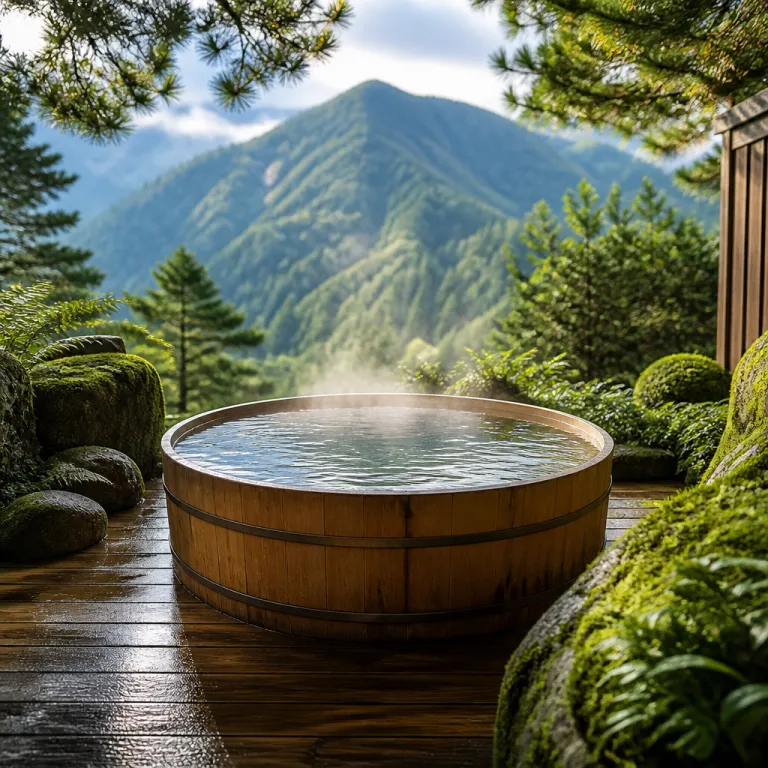
How onsen bath design uses shakkei as quiet luxury
Step into a serious Japanese hot spring inn and the first thing that matters is not the lobby, but the onsen bath design shakkei that shapes your view from the water. The finest properties treat the open air tub as a living area in miniature, a calm space where thoughtful design edits the surrounding landscape into a single composed frame. This is quiet luxury in its purest form, created not by gold leaf or chandeliers, but by the way steam, stone and borrowed scenery meet your eye line.
Shakkei, literally “borrowed landscape”, began in traditional Japanese garden culture, where designers used distant mountains, forests or a lake as part of a garden carefully arranged in the foreground. Over time, this garden art migrated into bath architecture, so that an outdoor rotenburo or an indoor hinoki tub could create space that feels far larger than the actual room. When you book a ryokan through a luxury platform, you are not just choosing a bed ; you are choosing which mountain, forest or city edge will be quietly pulled into your private soaking ritual.
For travelers used to Western spas, the restraint of traditional Japanese onsen spaces can feel almost austere at first. Yet every stone, every pine and every wall height reflects a material palette tuned to water temperature, wind direction and the exact angle of the horizon. The best inns work with the existing gardens and surrounding outdoor spaces rather than against them, so that the bath seems created by the terrain rather than imposed on it.
From japanese garden to bathing room: how shakkei migrated
Classical Japanese garden masters treated the garden as a three dimensional painting, using shakkei to frame a distant ridge or temple roof beyond the property line. They would create a japanese garden where foreground pines, mid distance shrubs and a faraway mountain formed one continuous landscape, even though each belonged to a different piece of land. When ryokan architects began to integrate hot spring baths into this tradition, they simply lowered the viewer’s eye level to the water surface and let the same rules of borrowed landscape apply.
In a well planned onsen bath design shakkei, the bath edge becomes the bottom of the picture, and the sky or forest canopy becomes the top. Between them, a garden designed with moss, rocks and a few carefully pruned trees acts as the middle ground, while the real drama might sit kilometres away on a wooded hillside or beside a lake. The result is a bathing space that feels both intimate and expansive, a room that opens through sliding glass or no wall at all into a landscape that appears created just for you.
This migration from garden to bath also changed interior design inside the ryokan house itself. Corridors, kitchen dining areas and even small lounges are often aligned so that glass doors or low windows follow the same sightlines as the outdoor tub, extending the sense of continuity. When you move from your tatami room to the rotenburo, you are not entering a new zone ; you are completing a sequence of spaces that all share one carefully edited view.
Framing devices: how edited views make a bath unforgettable
The difference between a good view and a great onsen bath design shakkei lies in editing, not in raw scenery. Many inns sit in spectacular landscapes, but only a few use walls, eaves and planting to create space that feels composed rather than accidental. As a solo traveler, you can read this design work the moment you slide open the door and see how the water, stone and horizon line meet.
Low eaves and cropped walls are the first tools of thoughtful design in these outdoor spaces. A wall that rises just above eye level when you sit in the water can block a nearby road or neighbouring house, while still allowing the borrowed scenery of a distant ridge to float above it. Sliding glass panels or half height glass doors often frame the same view from inside, so that the interior feels like an extension of the open air bath rather than a separate room.
Planting is the other quiet hero of shakkei in hot spring gardens. A garden carefully layered with maples, pines and groundcover can soften the transition between the built edge of the bath and the wild landscape beyond, especially when the material palette of stone and timber echoes the surrounding hills. In winter, a single snow covered branch leaning into the frame can feel like living art, while in autumn the same branch becomes a line of fire that pulls the whole borrowed landscape into focus.
Indoor baths, city inns and the power of a single window
Not every traveler books a remote mountain ryokan ; some choose a Japanese hot spring inn tucked into a compact city neighbourhood. In these tighter spaces, onsen bath design shakkei often relies on one deliberate window or a pair of sliding glass panels to connect the interior to a sliver of sky, a pocket garden or a distant rooftop shrine. The principle of borrowed scenery remains the same, even when the landscape is mostly tiled roofs and alleyways instead of cedar forests.
Inside, architects use interior design to create space that feels calm and expansive despite modest footprints. A small indoor tub might sit beside glass doors that open onto a narrow japanese garden, where a single stone lantern and one maple tree have been created as a micro landscape. When the bath water aligns with the sill, your eye follows the surface straight out to that tree, and the room seems to dissolve into the outdoor world.
Some contemporary ryokan experiment with modern design elements such as solar powered pathway lighting or minimalist concrete walls, yet they still follow the traditional Japanese respect for shakkei. A compact kitchen dining corner or shared living area may borrow the same view as the bath, using consistent material palette choices to tie the spaces together. Even in dense districts, a garden designed around one borrowed landscape, like a temple roof or a single old pine, can make an otherwise ordinary house feel anchored to something larger.
Reading orientation, seasons and privacy as a solo bather
When you arrive alone at a hot spring inn, you have the luxury of time to read the onsen bath design shakkei as if it were a quiet essay in stone and steam. Start with orientation ; a bath facing east will catch soft morning light on the borrowed landscape, while a western view turns sunset into part of the ritual. Notice how the wall heights, garden layers and even the angle of the steps into the water have been created to guide your gaze.
Autumn is the high season for borrowed scenery, when hillsides behind the ryokan flare into red and gold and every garden carefully placed maple becomes a focal point. In these weeks, the difference between an open view and an edited one is stark, because a thoughtfully framed slope or lake edge can feel like a private artwork. Spring and winter have their own rewards, from mist rising off the water to snow settling on rocks, but autumn shows shakkei at full power.
Privacy and comfort are also part of this thoughtful design, even if they are rarely mentioned in marketing copy or a privacy policy on a booking website. A well considered bath will create space where you feel screened from neighbouring rooms, using fences, trees and subtle level changes to protect sightlines without blocking the borrowed scenery. As you compare properties online, look beyond the pinterest share ready images and ask whether the gardens, outdoor spaces and interiors all follow one coherent vision of traditional Japanese borrowed scenery.
What to look for when booking: a practical eye for shakkei
Luxury booking platforms now show far more than a single hero shot, which means you can evaluate onsen bath design shakkei before you commit. Study how the bath relates to the wider landscape ; do the photos reveal a garden designed as a middle ground, or just a tub dropped beside a fence. Check whether the same borrowed landscape appears from the living area, bedroom and shared corridors, suggesting that the whole property was created around one strong view.
Pay attention to transitions between interior and outdoor spaces, especially the use of glass doors, sliding glass panels and consistent material palette choices. A ryokan that treats the bath, room and small kitchen dining corner as one continuous sequence usually offers a more coherent experience than a house where each space feels designed in isolation. If you are curious about how far this philosophy can stretch, look at how some geothermal hotels in other countries apply similar ideas, as in the way one acclaimed property rewrote geothermal architecture by aligning pools and terraces to surrounding cliffs and misty valleys on hot spring inn style platforms such as the article about China’s Mist Hot Spring Hotel.
Finally, remember that quiet luxury in hot spring travel is less about amenities lists and more about how you feel when you sink into the water and lift your eyes. A bath that uses traditional Japanese shakkei well will make even a modest space feel expansive, whether you are gazing at a forest, a lake or a fragment of city skyline. When you learn to read these cues, you stop chasing generic five star labels and start choosing inns whose design, gardens and borrowed scenery work together to create space for real rest.
FAQ
What does shakkei mean in the context of an onsen bath
Shakkei, or borrowed scenery, is a traditional Japanese garden principle where designers incorporate distant elements like mountains, forests or a lake into a near view. In an onsen bath, this means the tub, surrounding stones and garden are arranged so that a faraway hillside or skyline becomes part of the bathing frame. The result is a sense of depth and calm that makes the space feel larger and more connected to nature.
How can I tell if a ryokan uses shakkei well from photos
Look for images where the bath edge, garden and distant landscape align into one clear composition. If you see a garden carefully layered between the tub and a far hillside, with walls or eaves blocking distractions like roads or neighbouring houses, shakkei is probably at work. Consistent interior design and exterior materials that follow the same sightline from room to bath are another strong indicator.
Is shakkei only possible in remote mountain locations
Shakkei is easiest in rural landscapes, but it also works in city settings. An urban ryokan might borrow a temple roof, a single old tree or a slice of sky framed between buildings as its borrowed landscape. Even a compact japanese garden outside a window can create space that feels expansive when it is carefully aligned with the bath.
What season is best for appreciating shakkei in an onsen
Autumn is often the most dramatic season, because borrowed hillsides blaze with colour and every maple in the garden becomes a focal point. Winter can be equally powerful when snow settles on rocks and branches, turning the view into monochrome art. Spring and summer offer softer greens and mist, which suit travelers who prefer a more subdued, natural palette.
Why do some luxury baths feel peaceful even when they are small
Peace in a small bath usually comes from thoughtful design rather than size. When architects use shakkei, consistent material palette choices and careful planting, they create space that feels calm and connected to its surroundings. Good control of sightlines, wall heights and privacy also helps a compact bath feel like a private retreat instead of a cramped room.