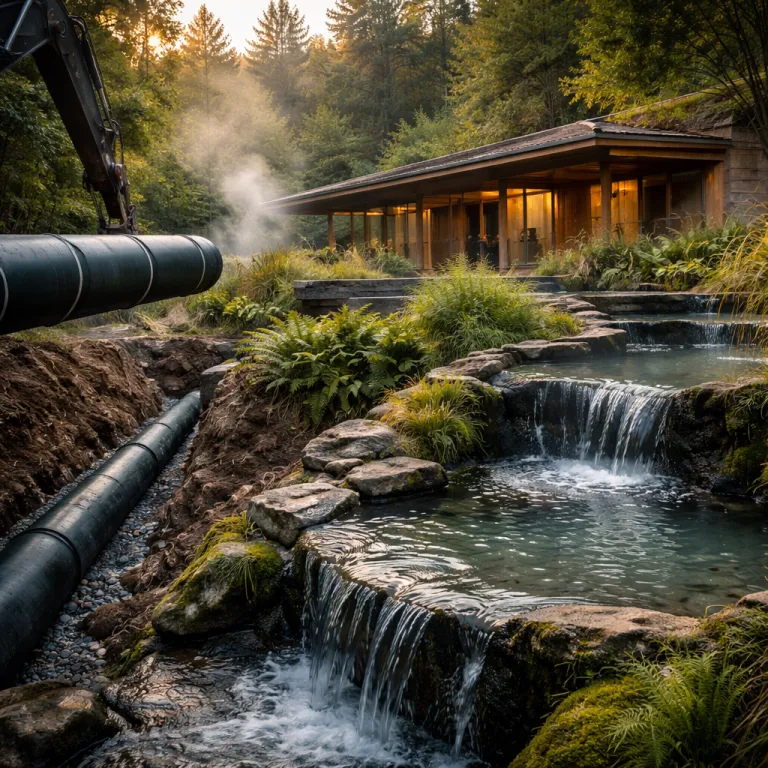
Mist as material: how hot spring hotel architecture design begins with steam
At Mist Hot Spring Hotel in Ruzhou, near Xuchang in Henan Province, China, the architecture starts with vapor. Fed by a geothermal aquifer reported at roughly 56–60°C in the Department of Architecture Co., Ltd. project description, the water is so hot that rising mist becomes the first design brief, not a technical problem to be extracted. In this spring hotel, steam is treated as a building material that defines every view and every movement.
The Department of Architecture Co., Ltd., led by architect Li Hao, approached the project as a study in atmospheric hospitality architecture. Instead of hiding humidity, the Department of Architecture team framed it with glass, bridges, and voids that hold the mist like a soft interior landscape. For travelers used to conventional hotel architecture, this feels less like a corridor system and more like walking through a carefully staged cloud.
In this hot spring hotel architecture design, water and air are inseparable. The geothermal hot spring pools sit beneath open atriums where cooler air meets hot water and creates drifting mist veils. These veils shift the color of light during the day and turn each framed view into a living installation that changes with temperature and wind.
For business travelers extending a stay, this approach reshapes the idea of a workspace. Instead of a sealed business floor, you move from room to meeting area through bridges that float above hot springs and mist filled courts. The result is a hospitality experience where the architecture design keeps reminding you that the real luxury is the geothermal landscape, not the lobby sculpture.
The architects describe energy saving strategies in terms of both performance and atmosphere. By letting mist cool naturally in tall atriums, the project reduces mechanical extraction and lets the resort breathe. According to the design team’s internal energy model, summarized in the Department of Architecture Co., Ltd. project description and echoed in an Interior Design magazine feature on Mist Hot Spring Hotel, this passive stack effect cuts exhaust energy demand by an estimated 15–20 percent compared with a fully sealed system. For guests, that means you feel the climate of this hot spring resort on your skin the moment you step out of the lift.
Bridges, atriums, and the new flow of hotel architecture
The most striking move in this hotel architecture is the bridge system. Instead of long double loaded corridors, 51 rooms are linked by open air bridges that cross mist filled voids and frame the surrounding landscape. Each bridge becomes a quiet threshold where you pause, feel the hot air, and look down at the water.
This circulation strategy turns a simple spring resort into a three dimensional promenade. You are never just walking to breakfast; you are moving through a vertical resort where every level offers a different composition of pools, trees, and drifting mist. For design minded guests, the architecture becomes part of the daily ritual, as memorable as the first coffee or the evening soak.
The Department of Architecture Co., Ltd. uses glass balustrades and carefully placed laminated glass panels to keep sightlines open. Translucent glass screens catch the mist clouds and tint them with a subtle color palette inspired by early hand colorized films. When you cross these bridges at night, the combination of water reflections and colored glass makes the whole spring hotel feel cinematic.
From a practical perspective, this layout also supports privacy and calm. Because rooms are grouped around several atriums rather than one long spine, guest flows are naturally dispersed across the resort. Business travelers returning late from meetings in nearby Xuchang City, or from other cities in China, can slip quietly to their rooms without passing a crowded lobby bar.
For operators, this is hospitality architecture that balances drama with efficiency. The bridges shorten routes between key hospitality spaces such as restaurants, lounges, and wellness areas, which helps staff save time during service peaks. At the same time, the open circulation reduces the need for artificial lighting during the day, another subtle energy saving move that benefits both the environment and the guest experience.
Color, glass, and mist: a cinematic approach to hot spring resort design
Step inside Mist Hot Spring Hotel and the first impression is chromatic. Instead of the beige minimalism common in many spring resorts, you find a carefully tuned color story that runs from guest rooms to public baths. The design team uses muted greens, ambers, and blues that echo early twentieth century hand tinted film frames.
This color strategy is not surface decoration; it is deeply tied to the hot spring hotel architecture design. Translucent laminated glass panels filter daylight into soft hues that change as the mist thickens or thins, so the same corridor can feel entirely different between morning and late evening. For frequent travelers used to predictable hotel palettes, this shifting atmosphere feels quietly luxurious rather than loud.
In guest rooms, the architecture design keeps lines simple so the eye moves easily toward the view. Large glass openings frame either the internal landscape of pools and bridges or the wider landscape beyond the resort, depending on orientation. When the mist rises from the hot springs below, it softens the edges of the architecture and makes the water and sky seem to merge.
The project also plays with reflection. Pools, glass, and polished stone surfaces bounce light and color between floors, so a single lantern or window can animate several levels of the hotel. This is where hospitality architecture becomes almost theatrical, yet it remains grounded in the honest behavior of water, steam, and light.
For guests balancing work and leisure, these spaces offer a different kind of workspace. A laptop session at a quiet table near an atrium feels less like office time and more like sitting in a private lounge above a geothermal stage. You still have strong Wi‑Fi and practical comforts, but the constant presence of mist and water keeps reminding you that this is a hot spring resort, not a generic business property.
From Xuchang to Japan and Iceland: how Mist Hot Spring Hotel rewrites the typology
Mist Hot Spring Hotel sits in Ruzhou, on the edge of Xuchang City in China, yet its influence reaches far beyond the local market. For travelers who know Japanese onsen ryokan, the contrast is immediate and instructive. Traditional Japanese properties tend to hide their architecture behind timber, tatami, and garden walls, while this project makes the structure and bridges part of the spectacle.
Compared with Icelandic geothermal lodges, which often lean toward brutalist concrete shells, this spring resort feels lighter and more porous. The architecture uses glass, slim reinforced concrete columns, and open atriums to let the landscape and mist flow through the building rather than sit outside it. Where some Icelandic projects frame the hot springs as a dramatic foreground to a heavy structure, this resort dissolves the boundary between building and water.
For reference, consider other notable hot springs properties such as Sheraton Huzhou Hot Spring Resort by MAD Architects or HOSHINOYA Guguan operated by Hoshino Resorts. Those hospitality examples show how global hotel architecture is experimenting with rings, terraces, and river hugging forms. Mist Hot Spring Hotel adds another chapter by treating mist itself as the primary structural idea.
Travelers who have visited Fushengyu Hotspring or a more traditional spring hotel in rural Japan will notice how different the guest journey feels here. Instead of moving from tatami room to rotenburo through low corridors, you cross elevated bridges and look down into steaming courtyards. The hot spring experience is still central, but the choreography of movement is vertical and spatial rather than purely horizontal and intimate.
This makes the property particularly appealing for the business leisure persona. You can spend the day in meetings in Xuchang City or other hubs in China, then return to a resort where the architecture design actively shifts your mindset. Every crossing of a mist filled atrium becomes a reset, a reminder that you are here for hot springs, water, and a view that you will remember long after the agenda is closed.
What design minded business travelers should know before booking
For executives used to efficient but anonymous hotels, Mist Hot Spring Hotel offers a different rhythm. The hot spring hotel architecture design prioritizes sensory experience over straight line circulation, which means you will walk a little more but feel much more. Bridges, atriums, and open staircases replace some of the short internal routes you might expect in a conventional business hotel.
On the practical side, the resort still delivers the essentials that matter on a work trip. Rooms are well insulated from the public hot springs, so you hear the water but not the conversations, and the workspace in each room is oriented to capture either a landscape view or an internal perspective of the mist filled courts. This makes late night emails or early calls feel less like a chore and more like a quiet interlude between soaks.
Guests often ask about the balance between spectacle and sustainability. Here, the Department of Architecture Co., Ltd. leans on strategies such as natural ventilation in atriums, careful orientation, and energy saving moves that reduce reliance on mechanical systems. As lead architect Li Hao notes in the project description, “We wanted the building to breathe with the hot spring, so guests can see and feel how the geothermal landscape shapes the architecture.”
For travelers comparing options across regions, it helps to think of this resort as part of a wider movement in hospitality architecture. From Sheraton Huzhou Hot Spring Resort in China to HOSHINOYA Guguan in Taiwan and intimate ryokan in Japan, the best projects treat geothermal water as the starting point for architecture design, not an add on spa feature. Mist Hot Spring Hotel pushes this idea further by letting mist, color, and glass dictate the form of the building itself.
If you value design as much as service, this hot spring resort belongs on your shortlist. The combination of geothermal water, cinematic glass work, and carefully staged views creates a stay that feels tailored to the way business travelers actually move, work, and unwind. You come for the hot springs, but you leave talking about the architecture, the mist, and the way the building changed your sense of time between meetings.
FAQ: hot spring hotel architecture design and planning your stay
How are hot spring hotels designed around geothermal water?
Hot spring hotels are typically designed so that the architecture responds directly to the source of geothermal water. At properties like Mist Hot Spring Hotel, the building form, circulation, and glass openings are organized around pools, steam, and the surrounding landscape. This approach ensures that every guest route keeps the hot springs and water views at the center of the experience.
What are the main benefits of staying in a hot spring resort?
Staying in a hot spring resort combines thermal bathing with a focused hospitality experience. Guests often report deep relaxation, better sleep, and a sense of reset after soaking in mineral rich hot springs. When the hotel architecture is well considered, the journey from room to bath becomes part of the restorative effect.
How does Mist Hot Spring Hotel differ from traditional Japanese onsen inns?
Mist Hot Spring Hotel uses bridges, atriums, and visible structure, while many Japanese onsen inns favor low rise timber buildings and intimate garden paths. At Mist, mist and glass are treated as primary design elements, creating dramatic internal landscapes. Japanese properties usually emphasize tatami rooms, sliding screens, and more concealed hot spring courtyards.
What should business travelers look for in hot spring hotel architecture design?
Business travelers should look for a clear separation between quiet workspaces and active bathing zones, along with efficient circulation between room, meeting areas, and hot springs. Properties like Mist Hot Spring Hotel offer rooms with strong acoustic insulation and views that help you decompress between calls. A well designed spring resort will let you move easily from laptop to onsen without sacrificing either focus or relaxation.
Are hot spring hotels generally eco friendly by design?
Many contemporary hot spring hotels aim for eco friendly design, especially when they use geothermal energy for heating and hot water. Architects often integrate natural ventilation, local materials, and landscape sensitive layouts to reduce environmental impact. The best hospitality architecture in this sector treats sustainability as part of the guest experience rather than a separate technical feature.
Sources
Department of Architecture Co., Ltd. project description for Mist Hot Spring Hotel; Interior Design magazine feature on Mist Hot Spring Hotel; regional tourism and geothermal data from Henan Province cultural and tourism authorities.