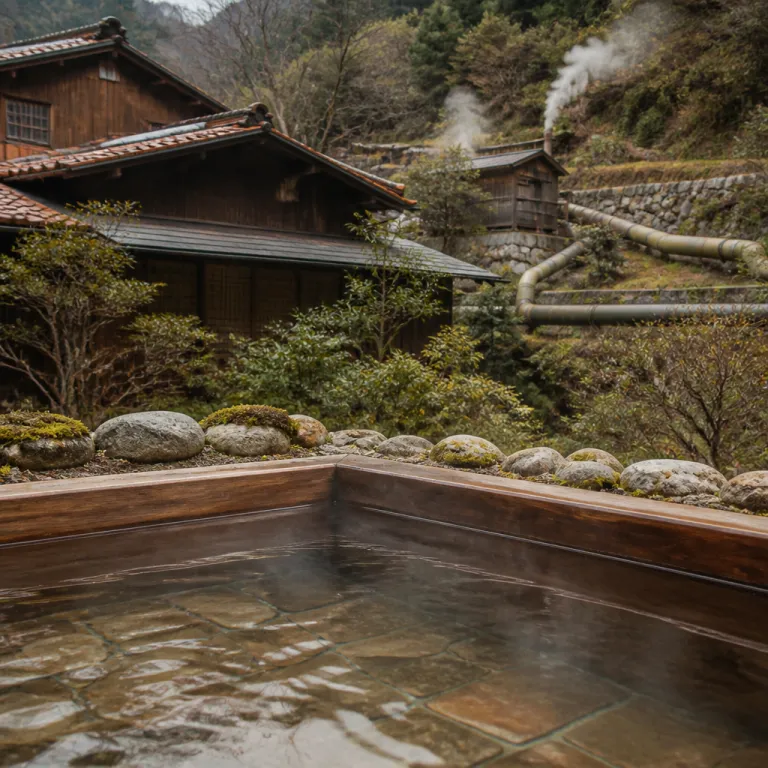
Okuhida onsen geothermal coexistence as a new luxury benchmark
In the northern Alps of central Japan, Okuhida Onsengo has quietly become a reference point for travelers who care about both hot spring indulgence and geothermal energy. This mountain cluster of onsen villages shows how a traditional hot spring destination can share the same underground heat with a modern geothermal power plant without draining the magic from the baths. For guests booking a premium ryokan here, the promise is simple yet rare; you soak in mineral rich spring water while the same geothermal resource helps generate electricity for the community.
The phrase often used to describe this balance between Okuhida’s hot springs and geothermal power is not just marketing language, but a lived reality shaped by careful development and long term planning. Local tourism materials from Gifu Prefecture note that there are well over one hundred individual hot spring sources in Okuhida feeding outdoor baths, indoor cypress tubs, and private suites, while a compact geothermal installation in the Nakao area taps the same underground heat for clean power. For the luxury traveler, that means the hot water in your rotenburo is part of a wider geothermal energy story that aims to respect both onsen culture and climate responsibility.
Unlike some springs Japan has lost to aggressive drilling, onsen Okuhida has insisted that geothermal power must follow the hot springs, not the other way around. Local ryokan owners, hot spring operators, and municipal officials have treated each well as a shared asset, not a private commodity to be exhausted quickly. A 2016 policy note from Takayama City describes the approach as “development that does not reduce spring flow or temperature for bathing,” and when you compare this to large scale projects near other hot springs in Japan, the restraint in Okuhida Onsengo feels almost radical.
How Okuhida allocates water between baths and energy production
The heart of Okuhida’s hot spring–geothermal balance lies in how the village allocates hot water between bathing and energy production. Every geothermal well is monitored for temperature, volume, and pressure, with priority given to maintaining stable flows for hot spring baths across seasons. Only the surplus geothermal heat and steam, after onsen needs are met, is directed toward the small Nakao geothermal power facility for controlled energy production.
This hierarchy is written into local agreements that bind ryokan, Nakao Onsen Co. Ltd., and the Nakao Geothermal Power Generation Corporation, so the onsen culture remains the anchor of development. Public documents on the Nakao project describe a compact binary plant in roughly the 1–2 MW output class, and when visitors arrive during peak bathing periods such as national holidays, operators can temporarily reduce power output to keep outdoor baths and indoor pools comfortably full. For a solo traveler choosing between different springs Japan offers, this governance model means your evening soak will not be sacrificed to generate electricity for distant cities.
The community’s approach answers a question many hot spring fans quietly ask; can hot spring destinations scale without destroying what makes them worth visiting. Here, the answer is operational rather than theoretical, because the geothermal power facility was designed from the start as a secondary user of spring water. Project summaries from C-Energy Corporation and Toshiba Energy Systems & Solutions note that extraction limits and continuous monitoring were built into the design, which is why Okuhida’s way of combining onsen and geothermal power has become a case study for regulators in Japan and beyond who are rethinking how to balance hot springs and renewable energy.
Inside the Nakao geothermal project and what it means for guests
The Nakao geothermal initiative sits above Okuhida Onsengo like a discreet engine, turning underground heat into usable power while feeding thermal water back to the village. Developed by Nakao Geothermal Power Generation Corporation with C-Energy Corporation and Toshiba Energy Systems & Solutions, the plant uses high temperature geothermal steam to drive turbines before routing cooled spring water to onsen operators. As project partners explain in their joint overview, “The plant provides thermal water to onsen, preserving tourism.”
For travelers, that sentence translates into something very tangible; the same geothermal energy that lights your tatami room also warms the hot spring that eases your shoulders after a long hike in the northern Alps. Because the power plant is compact, with a footprint of only a few thousand square meters, and sited away from guest areas, you see almost nothing of the industrial side while moving between your ryokan suite and the outdoor baths. Yet the staff can tell you, often in simple terms, how geothermal power from Nakao area wells supports both local grids and the long term viability of spring tourism.
Economically, this dual use of geothermal heat helps a depopulating rural area keep its hot springs open without overbuilding new hotels or chasing mass tourism. Revenue from energy production supplements income from hot spring tourism, funding maintenance of aging baths and safer piping for hot water and spring water. For readers interested in the broader financial picture of hot spring destinations, the analysis in the piece on the 195 billion question of whether hot spring tourism can grow without draining the source offers useful context on how places like onsen Okuhida fit into a global market.
What luxury guests actually experience in Okuhida Onsengo
From a guest perspective, the coexistence of Okuhida’s onsen and geothermal plant reveals itself not in technical diagrams, but in the feel of the baths and the rhythm of the villages. You might arrive at a hillside ryokan in Okuhida Onsengo, slide open the shoji, and see steam rising from private outdoor baths framed by cedar and the northern Alps. The hot spring water here often emerges close to boiling, then is tempered with cold mountain water so the baths hold a deep, steady heat that lets you soak long without fatigue.
Many premium properties in onsen Okuhida now highlight their role in the geothermal energy story alongside more traditional markers of Japanese hospitality. Staff will explain which wells supply their baths, how the hot water is cycled before returning to the ground, and why the power plant’s draw is capped to protect both temperature and flow. For travelers who have already sampled refined private baths in other regions, curated guides to Hakone hotels with private onsen for refined hot spring escapes provide a useful comparison point for understanding Okuhida’s quieter, more elemental style.
Rooms tend to emphasize natural materials and views over flashy amenities, because the real luxury is the direct line between geothermal heat and your own bath. You feel it when snow falls on your shoulders while the water heats your bones, or when a pre dawn soak reveals stars above the dark outline of the northern Alps. In those moments, the idea of Okuhida’s onsen and geothermal energy working in tandem stops sounding like policy language and becomes the texture of your stay.
Lessons from Okuhida for other geothermal and hot spring regions
What makes Okuhida’s onsen–geothermal model so closely watched is not only its technical success, but its governance framework. The village shows that small scale, distributed geothermal power plants can sit alongside dense clusters of hot springs when local operators control how much energy is extracted. That stands in contrast to some larger projects where geothermal development has outpaced the capacity of springs and baths, creating tension between power companies and onsen owners.
For volcanic nations weighing similar choices, Okuhida Onsengo offers several clear lessons that matter to travelers as much as to engineers. First, treat each hot spring and its wells as part of a shared cultural landscape, not just a resource for energy production, so that onsen culture remains central to planning. Second, design geothermal power facilities like the Nakao plant to be modular and adjustable, able to ramp down during peak tourism periods when hot water demand for ryokan and public baths is highest.
Places as different as Iceland, New Zealand, and Kenya can read this as a template for aligning geothermal energy with spring tourism rather than setting them in opposition. The Blue Lagoon’s origin as a byproduct of a geothermal power plant shows one path, while Okuhida’s onsen first approach shows another that keeps traditional springs Japan style at the forefront. For travelers choosing where to book their next stay, understanding these models helps you support destinations that protect their hot springs for the long term instead of chasing short term power gains.
FAQ
How does the Nakao geothermal power plant affect local hot springs in Okuhida ?
The Nakao geothermal facility in Okuhida Onsengo was designed to work with, not against, existing hot springs. It uses high temperature geothermal steam for power generation, then routes thermal water back to onsen operators so that bathing remains the primary use. As the project partners state in their summary, “The plant provides thermal water to onsen, preserving tourism.”
Will my hot spring experience feel different in a village that uses geothermal power ?
In Okuhida, most guests report that the baths feel entirely traditional, because the same wells and spring water still feed the tubs. The difference lies behind the scenes, where careful management of geothermal heat and flow ensures that both energy production and bathing can coexist. You enjoy classic Japanese onsen culture while knowing that part of the underground heat is also helping to generate electricity.
Is Okuhida Onsengo a good choice for eco conscious luxury travelers ?
Okuhida Onsengo suits travelers who want premium ryokan stays without ignoring environmental impact. The village’s approach to managing hot springs alongside geothermal power means your hot water comes from a resource managed for the long term, with strict limits on extraction for energy. That balance between comfort, culture, and geothermal technology makes it a strong option for sustainability minded guests.
How does Okuhida compare with other famous hot spring regions in Japan ?
Compared with more built up resorts, Okuhida feels quieter and closer to the northern Alps landscape, with many outdoor baths facing forests and peaks. While places like Hakone offer easier access and a wider range of luxury properties, Okuhida stands out for integrating a working geothermal power plant into a traditional hot spring network. Travelers who value both deep soaking and thoughtful energy production often see onsen Okuhida as a complementary experience rather than a substitute.
Can the Okuhida model be applied to other geothermal destinations worldwide ?
Regulators and operators in other volcanic regions study Okuhida because it proves that small scale geothermal power can coexist with dense clusters of hot springs. The key elements are strict water allocation rules, local control over wells, and a commitment to keeping onsen culture at the center of development. While every geology is different, the principles behind Okuhida’s onsen–geothermal coexistence offer a practical template for springs Japan, Iceland, New Zealand, Kenya, and beyond.