Why a miyajima ryokan stay feels different from any hotel
On Miyajima Island, a traditional ryokan stay offers a quieter, more layered experience than a conventional hotel stay in Hiroshima. A miyajima ryokan places you within walking distance of the sea, the forested slopes, and the iconic torii gate, while surrounding you with Japanese style architecture and attentive service. For many guests, the combination of tatami rooms, onsen baths, and views of the Seto Inland Sea turns a simple room reservation into a deeply memorable stay.
The island sits just off Miyajimaguchi, the ferry port on the Hiroshima side, and the short crossing feels like a soft reset from city pace to shrine calm. Once you step onto Miyajima Island, narrow lanes lead toward Itsukushima Shrine, where the vermilion torii gate appears to float at high tide and anchors the spiritual character of the area. Staying in a local inn on the island rather than commuting from a grand hotel in Hiroshima allows guests to experience the shrine precincts at dawn and after dusk, when day trippers have gone.
Traditional ryokans on Miyajima usually feature tatami floored rooms, sliding shoji screens, and low tables that staff clear away to lay out futons for each guest. Many properties blend this Japanese style room layout with discreet modern comforts, such as climate control, Wi-Fi, and ensuite toilets, to meet expectations of luxury travelers. The average nightly rate for a quality miyajima ryokan often starts around 20 000 JPY per person including meals, which reflects both the limited number of establishments and the high level of service, according to regional tourism surveys from Hiroshima Prefecture and Japan National Tourism Organization (JNTO) summaries.
Across the island, roughly twenty ryokans operate with a shared goal of preserving Japanese hospitality while welcoming international guests. Well known examples include Iwaso, a historic inn near Momijidani Park, Miyajima Grand Hotel Arimoto close to the shrine, and Ryoso Kawaguchi in the village center, each offering a slightly different take on the classic Japanese inn. This focus on cultural immersion means that your room is not just a place to sleep, but a curated setting where the rhythm of kaiseki dinner, hot spring bathing, and quiet tatami time shapes the entire stay.
For travelers comparing options, a miyajima ryokan stay is ideal if you value slow evenings, multi course Japanese cuisine, and the chance to soak in an onsen before bed. A more conventional hotel in Hiroshima city suits guests who prioritize nightlife, shopping, and quick rail access, but it cannot replicate the sound of waves outside an open air bath or the lantern lit approach to a shrine. When you choose to stay in traditional inns on Miyajima, you are effectively choosing the island itself as your living room, with the inland sea and mountains forming the natural walls.
Choosing between Japanese style and western style rooms on Miyajima Island
Room configuration is one of the most important decisions when booking a miyajima ryokan, especially for first time visitors to Japan. Many island inns offer both fully Japanese style rooms and hybrid layouts that combine tatami with western style beds, giving guests flexibility without losing the inn’s character. Thinking carefully about how you like to sleep and move around your room will help you select the right style room for your stay.
A pure Japanese style room typically features woven tatami flooring, low furniture, and futon bedding stored in a closet during the day. Staff transform the room after dinner, laying out futons where the table once stood, which creates a ritual that many guests find calming and intimate. This layout also maximizes floor space, making even modestly sized rooms feel generous, especially when a wide window frames the ocean view or the wooded slopes behind the island.
Travelers who prefer a raised bed often choose a western style room within a miyajima ryokan, which still retains Japanese design cues such as shoji screens and natural wood. These hybrid rooms suit older guests or anyone with mobility concerns, because getting up from futons can be challenging after a long hot spring soak. Families sometimes reserve a combination room, where part of the space is tatami and part is western style, allowing one guest to sleep on a bed while another enjoys the traditional futon experience.
Luxury focused ryokans on Miyajima Island usually categorize their rooms by view and bath access as well as by style. You might see categories such as ocean view Japanese style room with private onsen, or mountain view western style room with access to communal open air baths, each priced differently in JPY. When you check availability on official booking pages, pay close attention to whether the bath is private or shared, and whether it is a true hot spring or a heated bath using regular water.
Because demand for authentic experiences has grown, many ryokans on Miyajima now integrate modern amenities without diluting their heritage. A miyajima ryokan may offer underfloor heating, high pressure showers, and premium mattresses in western style rooms, while still serving traditional kaiseki dinners in your room or in a quiet dining hall. If you are interested in how hot spring culture extends beyond Japan, you can read about global bathing traditions in a detailed feature on countries where hot spring culture runs just as deep, then return to your booking with a clearer sense of what makes Miyajima unique.
Onsen etiquette and the appeal of private onsen at a miyajima ryokan
For many travelers, the onsen is the heart of a miyajima ryokan stay, yet it can also be the most intimidating element. Communal hot spring baths follow long standing Japanese etiquette, and understanding these customs helps guests relax and enjoy the experience fully. The basic rule is simple; you wash thoroughly before entering the shared bath, then soak quietly while appreciating the view and the mineral rich water.
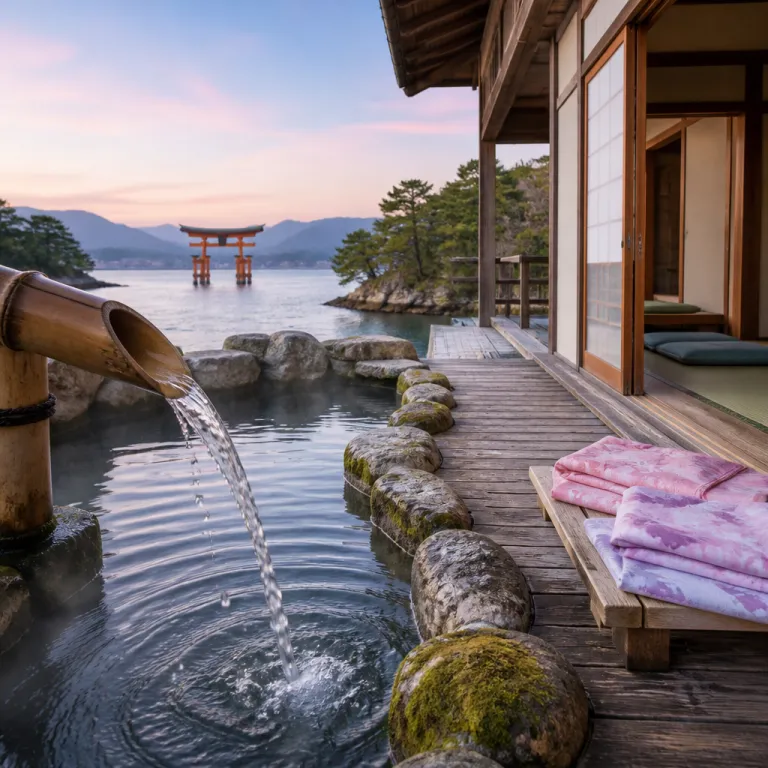
Most ryokans on the island provide separate male and female communal baths, often with both indoor pools and open air tubs that overlook the inland sea or the forest. A well designed open air bath might frame the Seto Inland Sea and the silhouette of the torii gate in the distance, especially at higher end properties near the shoreline. Some miyajima ryokan houses also rotate bathing times so that guests can experience both the indoor and outdoor sections, which is worth checking when you check availability.
Travelers who feel shy about communal bathing often choose a room with a private onsen, which allows them to soak without sharing the space. A private bath can be a stone tub on a terrace with partial ocean view, or a deep hinoki wood tub inside a Japanese style room, fed by hot spring water. These private options usually command higher JPY rates, but many guests consider the privacy and flexibility worth the premium, especially during cooler months.
When comparing different inns, look carefully at how each property describes its baths, because not every bath is a true hot spring. Some establishments use natural hot spring sources for both communal and private onsen, while others supplement with heated tap water in certain rooms, and this distinction matters to serious bathers. If you are curious about broader trends in thermal tourism, an insightful analysis of the next hot spring boom is available through an article on where to watch for emerging hot spring destinations.
Staff at a miyajima ryokan are accustomed to guiding international guests through onsen etiquette, from where to place your towel to how to tie your yukata. One guest described the experience as “like being gently coached through a centuries old ritual,” after a staff member quietly demonstrated the washing sequence at the entrance to the bath. They may remind you that tattoos can be sensitive in some communal baths, though many properties have relaxed their policies or suggest private onsen use for tattooed guests. As one local information sheet explains succinctly, “What is a ryokan? A traditional Japanese inn featuring tatami-matted rooms and communal baths.”
Location, views, and access ; mapping your ideal ryokan Miyajima stay
Location shapes every aspect of a miyajima ryokan experience, from the first glimpse of the torii gate to the last walk back from the shrine at night. Properties closest to Itsukushima Shrine offer the shortest strolls to the waterfront, often just a few minute walk along lantern lit streets. These traditional inns tend to emphasize ocean view rooms and quick access to the main shopping arcade, which suits guests who want to step out frequently.
Further inland, on the slopes behind the village, a different style of miyajima ryokan takes advantage of elevation to frame the Seto Inland Sea and the surrounding islands. From these higher vantage points, open air baths can feel more secluded, with panoramic views that change with the tide and weather. Guests who choose hillside ryokans often value quiet nights, starry skies, and the sense of retreat after visiting the shrine and the bustling waterfront.
Reaching Miyajima Island is straightforward from Hiroshima city, with frequent trains and trams connecting to Miyajimaguchi Station and the nearby ferry pier. Once you arrive at the island pier, many ryokans are within a ten to fifteen minute walk, while some offer pick up services for guests with luggage. Before you travel, it is wise to check availability and walking times using a reliable map service; many official websites embed a Google Map link to show the route from the ferry terminal to the inn.
When comparing locations, consider how you plan to structure your days and nights. If sunrise photography at the torii gate is a priority, a miyajima ryokan near the shoreline will make those early starts easier, especially when you can return quickly to your room for breakfast. If you prefer long soaks in a private onsen with a sweeping ocean view, a hillside property overlooking the inland sea may be more compelling than a compact inn near the main street.
Some travelers split their time between a grand hotel in Hiroshima and a more intimate ryokan Miyajima stay, using the city as a base for day trips before retreating to the island. This combination allows you to enjoy Hiroshima’s museums and dining scene while still dedicating at least one night to the quiet rhythms of Miyajima Island. However you arrange it, plotting your movements on a Google Map before booking will help you understand distances, gradients, and how each ryokan’s location supports your preferred pace.
Pricing, booking strategies, and what your JPY actually buys
Rates at a miyajima ryokan can initially seem high compared with a standard hotel in Hiroshima, but the pricing structure reflects a more inclusive experience. Most island inns quote per person rates in JPY that include both dinner and breakfast, access to onsen facilities, and attentive service throughout your stay. When you break down the cost of multi course kaiseki meals, hot spring access, and the unique setting on Miyajima Island, the value becomes clearer.
Current data from regional tourism sources indicates that the average nightly rate for quality ryokans in the area sits around 20 000 JPY per person, with luxury suites and private onsen rooms priced higher. Entry level Japanese style rooms without private baths remain more affordable, while ocean view suites with open air tubs and extended floor space command a significant premium. Families or small groups sometimes reduce per person costs by sharing larger rooms, though this can affect privacy and sleeping arrangements.
Booking strategies matter because the number of ryokans on Miyajima is limited, with roughly twenty establishments operating on the island. High demand periods around national holidays, cherry blossom season, and autumn foliage can see popular miyajima ryokan properties fully booked months in advance. To secure your preferred style room and bath configuration, it is wise to check availability early through official websites or trusted travel agencies, then confirm details directly with the property.
Many luxury focused travelers use online booking platforms to compare different inns, then contact the ryokan to clarify meal preferences, allergy concerns, or requests for private onsen access. Staff often appreciate early notice about dietary restrictions, because kaiseki menus rely on seasonal ingredients and careful preparation. When you read reviews, pay attention not only to star ratings but also to comments about room maintenance, bath cleanliness, and the quality of interaction between staff and guest.
If you are planning a broader hot spring focused itinerary across Japan, you may find it helpful to consult curated guides to seasonal bathing, such as an in depth feature on hot spring properties that make peak summer worth braving. These resources can help you benchmark miyajima ryokan pricing and amenities against other destinations, ensuring that your budget aligns with your expectations. Once you have a clear sense of what your JPY buys, you can choose between a compact Japanese style room, a spacious western style suite, or a hybrid layout with private onsen, confident that each option reflects a deliberate trade off between space, view, and exclusivity.
Cultural immersion ; how a miyajima ryokan stay deepens your visit to Hiroshima
Staying overnight at a miyajima ryokan transforms a day trip to Hiroshima and Miyajima Island into a layered cultural journey. The contrast between the Peace Memorial Park in Hiroshima city and the serene precincts of Itsukushima Shrine on the island becomes more pronounced when you have time to absorb both at an unhurried pace. By returning to a Japanese style room after visiting these landmarks, guests can process the day’s impressions in a quiet, reflective setting.
Many ryokans on Miyajima emphasize local cuisine, serving kaiseki dinners that highlight seafood from the Seto Inland Sea and vegetables from nearby farms. Oysters, conger eel, and seasonal fish often appear in multiple preparations, paired with regional sake and carefully plated on lacquerware and ceramics. Breakfasts tend to be Japanese style as well, with grilled fish, rice, miso soup, and pickles, though some properties offer western style options for guests who prefer a lighter start.
Cultural immersion extends beyond meals and baths into small daily rituals. Staff may show you how to wear a yukata properly, explain the meaning of talismans from the shrine, or suggest the best time to walk to the torii gate at low tide. In the evening, a short minute walk from your ryokan Miyajima to the darkened shrine approach can feel almost private, with only a few other guests lingering under the lanterns.
Because the island’s accommodation capacity is limited, staying in traditional inns on Miyajima also supports the local economy more directly than commuting from a large grand hotel in the city. Many inns partner with local artisans, fishermen, and farmers, integrating their work into room decor, menus, and guest experiences. This network of relationships helps preserve traditional crafts and foodways, while giving visitors a more authentic sense of place.
For travelers who value context, a miyajima ryokan stay offers a way to connect the physical landscape of the inland sea, the spiritual heritage of Itsukushima Shrine, and the contemporary life of Hiroshima Prefecture. You wake to the sound of waves or temple bells, soak in a hot spring bath with an ocean view, then step out to explore the island’s trails and temples. Returning to your room at night, you carry not just photographs of the torii gate, but a lived experience of Japanese hospitality that is difficult to replicate elsewhere.
Practical planning tips for first time guests at ryokans Miyajima
Thoughtful planning can turn a first miyajima ryokan stay from simply pleasant into truly exceptional. Start by clarifying your priorities; is your focus on a private onsen, proximity to Itsukushima Shrine, or a particular style room with ocean view. Once you know what matters most, you can filter ryokans Miyajima by location, room type, and budget in JPY.
When you check availability, pay attention to check in and check out times, which often follow a 15 00 arrival and 10 00 departure pattern. Arriving earlier allows you to leave luggage at the ryokan Miyajima reception, explore the island, then return for your first hot spring bath before dinner. Because dinner times are usually fixed, late arrivals can mean rushed meals, so align your ferry terminal schedule with the inn’s expectations.
Packing light is wise, because many streets on Miyajima Island are narrow and slightly sloped, and your ryokan may be a ten minute walk from the pier. Comfortable walking shoes, a small daypack, and layers for changing temperatures will make shrine visits and evening strolls more enjoyable. Inside the ryokan, you will likely spend much of your time in provided yukata and slippers, which simplifies clothing choices and enhances the sense of retreat.
Respect for local customs is central to a smooth stay. Remove shoes at the entrance, handle tatami carefully, and follow staff guidance on onsen etiquette, from washing before entering the bath to keeping towels out of the water. As local advice often notes, guests are encouraged to inform the inn about dietary restrictions early and to respect local customs and etiquette, which helps staff tailor the experience to each guest.
Finally, use a reliable map tool to visualize your movements between Hiroshima city, the Miyajimaguchi ferry terminal, and your chosen ryokan. Many official sites embed a Google Map that shows walking routes and estimated times, which is especially helpful if you are arriving after dark. With clear expectations about rooms, baths, meals, and logistics, your first stay at a miyajima ryokan can set a benchmark for every future hot spring journey across Japan.
Key figures and trends for miyajima ryokan stays
- Around twenty ryokans operate on Miyajima Island, which creates a relatively limited accommodation supply compared with major urban hotel districts in Hiroshima Prefecture.
- The average nightly rate for a quality ryokan stay on Miyajima is approximately 20 000 JPY per person including meals, placing the island firmly in the premium segment of Japan’s hot spring destinations.
- Check in times at most ryokans Miyajima cluster around 15 00, with check out at 10 00, a schedule that aligns with ferry connections and encourages guests to explore the island before and after bathing.
- Industry observers note a clear trend toward integrating modern comforts such as Wi-Fi and climate control into traditional Japanese style rooms, reflecting increased demand for authentic yet convenient experiences.
- Local tourism initiatives emphasize sustainable tourism, encouraging overnight stays at ryokans to support the island’s economy while reducing pressure from short term day trip crowds.
FAQ about staying at a miyajima ryokan
What is a ryokan, and how does it differ from a hotel?
A ryokan is a traditional Japanese inn that typically features tatami floored rooms, futon bedding, and communal baths, often using natural hot spring water. Unlike a standard hotel, a ryokan stay usually includes multi course kaiseki dinner and Japanese breakfast served at set times. The atmosphere emphasizes quiet, ritual, and close interaction between staff and guest rather than anonymous, high volume service.
Do ryokans on Miyajima Island include meals in the room rate?
Most ryokans Miyajima include both dinner and breakfast in the per person rate quoted in JPY. Dinner is often a seasonal kaiseki meal showcasing seafood from the Seto Inland Sea, while breakfast tends to be Japanese style with rice, fish, and side dishes. Some properties offer plans without meals or with breakfast only, but these are less common and should be confirmed during booking.
Are private baths available at miyajima ryokan properties?
Many, but not all, miyajima ryokan properties offer rooms with private baths, and a subset of these are true private onsen supplied by natural hot spring sources. Other private baths may use heated tap water while still providing a relaxing soak and a good view. Because availability is limited, guests who prioritize private bathing should check availability early and confirm bath type directly with the inn.
How far are ryokans from the Miyajima ferry terminal and Itsukushima Shrine?
Most ryokans on Miyajima Island are located within a ten to fifteen minute walk from the ferry terminal, following level or gently sloping streets. Properties closest to Itsukushima Shrine may be only a few minutes on foot from the main gate, while hillside inns can require a slightly longer walk uphill. Many official websites provide a Google Map link with precise walking times and directions.
When is the best time to book a miyajima ryokan stay?
Because the number of ryokans Miyajima is limited and demand is strong during cherry blossom and autumn foliage seasons, it is advisable to book several months in advance for those periods. Weekends and national holidays also fill quickly, especially for rooms with ocean view or private onsen. For flexible travelers, midweek stays outside peak seasons offer better availability and sometimes more favorable rates.