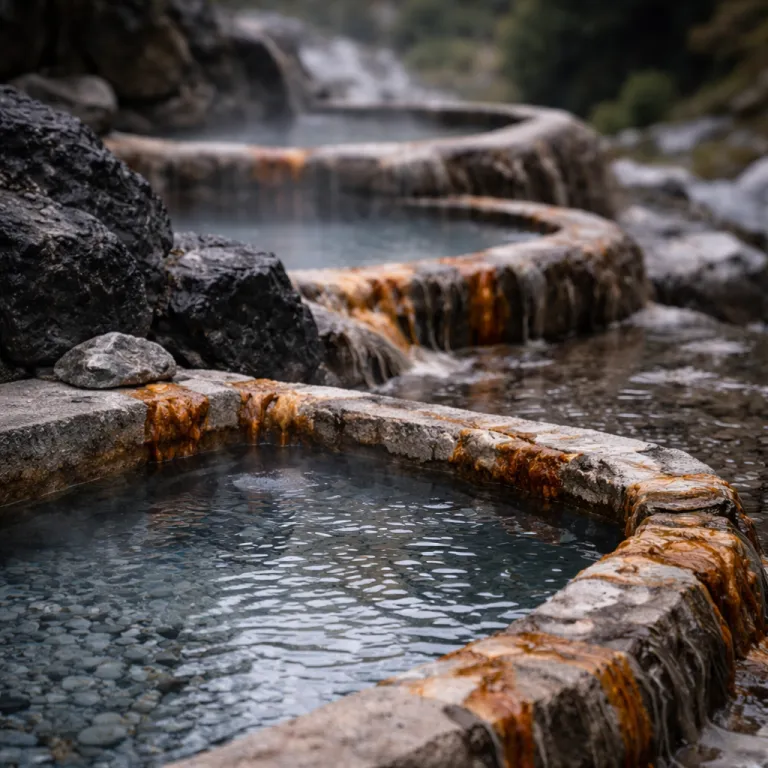
Why oita onsen beyond beppu hidden valleys matter for serious bathers
Most travelers arrive in Beppu, see the steam, and never ask what lies beyond the city limits. Those who care about the mineral character of the water, the shape of the baths, and the way the mountain air cools your face while the hot spring heats your bones quickly realize that the real depth of Oita Prefecture begins where Beppu’s neon ends. Thinking in terms of onsen beyond Beppu is less a search query and more a mindset for travelers who want the best springs, not just the busiest ones, and who are willing to follow the steam inland into quieter valleys.
Beppu remains one of Japan’s great hot spring cities, with public bath houses, sand baths, and the famous Hyotan Onsen drawing crowds that number in the millions each year. Yet Oita Prefecture holds more than 4,700 hot spring sources according to the Oita Prefecture Tourism Association, and the quiet valleys, river gorges, and high plateaus outside the city offer a very different onsen experience, where the sound of water on stone replaces the noise of tour buses. When you look at a detailed Google Map of the area, you see how the springs scatter inland toward Bungo Ono, the Kunisaki Peninsula, and the Usa Jingu pilgrimage routes, forming a constellation of small, characterful inns and day use baths.
Luxury travelers who care about privacy, architecture, and the specific feel of the hot water should plan at least two or three nights in multiple hot springs rather than a single night in central Beppu. One night on the main strip gives you the spectacle of Beppu Bay and the city lights, but it rarely delivers the slow, layered experience that defines the best Japan onsen stays. Stretching your route across several lesser-known springs in Oita Prefecture lets you enjoy both private hot baths and atmospheric public bath houses, with time to notice how each spring water smells, tastes, and feels different on the skin, and how the surrounding landscape shapes the mood of each soak.
Yufuin, Tsukahara and the quiet power of Oita’s inland springs
Yufuin sits in a broad basin framed by Mount Yufu, and its onsen culture feels almost artisanal compared with Beppu’s urban energy. The town’s ryokan cluster around rice fields and small galleries, and many suites come with private open air baths where you can enjoy clear spring water under a wide, quiet sky. For solo travelers, this is one of the best areas in Japan to pair a refined hot spring stay with slow walks, and resources such as solo hot spring travel etiquette and logistics guides help you navigate everything from public bath manners to dinner pacing and how to move confidently between different types of baths.
Just beyond Yufuin, Tsukahara Onsen hides in a volcanic caldera, its hot springs rich with minerals that give the water a distinctive scent and a slightly rough texture on the skin. Years ago this would have been a place known only to dedicated onsen fans, but it still feels remote, with simple baths that foreground the hot water rather than spa theatrics. The best time to visit is early morning or late evening, when the air is cool and the steam from the open air baths hangs low over the pools, and when day trip crowds are thinner and the valley feels almost private.
Within greater Beppu, micro districts such as Myoban Onsen and Horita Onsen offer a bridge between the city and the countryside for travelers seeking an inland Oita hot springs itinerary that still feels logistically manageable. Horita Onsen, a historic facility with milky baths and private rentals, shows how a modest public bath can still feel deeply luxurious when the spring water is right and the surrounding air is quiet. Myoban’s thatched yunohana huts, where mineral crystals form from evaporating hot water, remind you that these springs are part of a living landscape, not just a tourism product, and that Beppu’s satellite districts can feel as rural as any inland valley.
River gorges, farm valleys and the case for a multi night Oita itinerary
Once you leave the Beppu Bay coastline and drive inland, Oita’s hot spring story shifts from city spectacle to river and forest. Amagase Onsen, for example, strings its baths along a river gorge, where open air tubs sit just above the waterline and you can hear the current while you soak. The contrast with a central Beppu public bath is immediate, and it underlines why a route focused on hidden hot springs in Oita rewards travelers who value space, silence, and natural scenery, especially in the early morning when mist hangs over the river.
Further south, the Bungo Ono area folds hot springs into an agricultural landscape of terraced fields, limestone gorges, and small shrines. Here, the best time to bathe is often late afternoon, when the air cools over the river and the hot water feels especially restorative after a day of walking to waterfalls or exploring stone Buddhas carved into cliffs. Many inns in this part of Oita Prefecture offer both shared baths and private hot spring tubs, so couples and solo travelers can choose between social soaking and quiet, inward facing sessions, and can adjust their plans based on weather and energy levels.
For travelers balancing budget and comfort, it is worth studying how to find a memorable hot spring stay without the luxury price tag, and resources such as guides to value focused onsen stays can help you allocate your splurge nights wisely. One strategy is to book a high end ryokan such as Okuhita Onsen Umehibiki in Hita, which offers suites with private open air baths and views over forested hills, for one night, then spend the next night in a simpler inn near a characterful public bath. This pattern lets you experience both the polished hospitality of a luxury Japan onsen property and the grounded charm of small town springs that locals use every day, without losing sight of your overall budget.
Steam, mud, sand and air baths: Beppu’s satellites for elemental bathing
Beppu’s reputation rests on variety as much as volume, and its satellite districts show how far hot spring culture can stretch while still feeling authentically Japanese. Hyotan Onsen, for instance, combines traditional wooden baths with playful features such as cascading waterfalls of hot water, yet the mineral rich springs remain the star of the experience. When you step back and look at the wider map of Oita Prefecture, these places become anchor points in a broader journey through Oita’s hot springs rather than the whole story, encouraging you to link them with quieter valleys and rural inns.
In the hills above the city, Myoban’s clay rich pools and nearby mud baths offer a tactile counterpoint to the clear springs of Yufuin and Amagase. Sand baths along the coast, where attendants bury you in naturally heated sand before you rinse in a hot spring bath, add another layer to the sensory palette, especially on cool days when the sea air sharpens every sensation. Some facilities also experiment with air baths, where you rest in warm, mineral laden steam without immersing in water, and these air baths can be surprisingly effective for travelers who tire quickly in very hot springs or who prefer shorter, gentler sessions.
Beppu’s recent tourism collaborations with nearby Yufuin aim to position the wider area as one of the world’s top regions for onsen tourism, and that ambition will likely reshape how visitors move through Oita in the coming years. Instead of a quick one night stop, itineraries will increasingly link the city’s experimental baths with quieter valleys, shrine towns such as Usa Jingu, and even the coastal routes toward the Kunisaki Peninsula. For travelers, this shift is an opportunity to treat Beppu not as the final destination, but as a lively hub within a broader circuit of springs, baths, and landscapes that rewards slower, more intentional travel.
Planning a refined Oita circuit: routes, etiquette and booking strategy
Designing a thoughtful route through Oita Prefecture starts with deciding how you want to feel in each place, not just how many hot springs you can tick off. A balanced itinerary might begin with one night in Beppu for its public bath culture and experimental facilities, then move inland to Yufuin for private open air baths and slow town walks, before finishing in a quieter valley such as Amagase or Bungo Ono. Using a detailed Google Map while you plan helps you understand driving times between springs, station locations such as Beppu, Yufuin, and Amagase, shrine sites such as Usa Jingu, and coastal viewpoints on the Kunisaki Peninsula.
For solo travelers, understanding etiquette and logistics in advance makes the experience smoother, and in depth resources on solo hot spring travel explain everything from undressing protocols to how to pace multiple baths in one day. Check each onsen’s tattoo policy before you book, because policies vary and can change without notice; Horita Onsen, for example, has been listed as allowing tattoos on recent tattoo friendly onsen databases, but you should confirm directly with the facility by phone or email. When in doubt, arrive early, speak quietly in the changing rooms, rinse thoroughly before entering the baths, and keep towels out of the water to respect both the spring and fellow bathers.
From a booking perspective, the best time to secure high demand rooms with private hot spring baths is several months in advance, especially for weekends and national holidays in Japan. Many luxury ryokan in Oita Prefecture now use digital platforms and multilingual booking engines, but availability for suites with private hot tubs or open air baths remains limited, so flexibility with dates helps. Aim for two or three nights in the region overall, with at least one stay focused on a natural setting where you can enjoy the interplay of hot water, cool air, and quiet surroundings without rushing to the next city, and consider using local trains or rental cars to link Beppu, Yufuin, and one rural valley in a simple loop.
FAQ
Is it worth leaving Beppu to visit other hot springs in Oita Prefecture ?
Yes, leaving Beppu opens up a very different side of Oita’s onsen culture. Inland areas such as Yufuin, Amagase, and Bungo Ono offer quieter baths, more natural settings, and often more refined ryokan with private hot spring tubs. As a concrete example, Beppu to Yufuin takes about 40–50 minutes by JR train via Oita Station or roughly 35–45 minutes by car, so combining Beppu with at least one or two of these valleys is straightforward and gives a richer sense of how varied Japan’s hot springs can be within a single prefecture.
How many nights should I spend in Oita if I love hot springs ?
Plan for a minimum of two nights, and three if you can spare the time. One night in Beppu plus one or two nights in smaller onsen towns lets you experience both lively public bath culture and more secluded, private hot spring stays. A simple three day plan might look like this: Day 1, arrive in Beppu around midday, enjoy an afternoon public bath and an evening sand bath; Day 2, travel to Yufuin in the morning, check into a ryokan with a private open air bath, then walk around Lake Kinrin before a long evening soak; Day 3, continue to Amagase by train or car for a riverside bath and a final overnight stay before departing Oita.
Are tattoos accepted at Oita’s onsen ?
Tattoo policies vary widely between facilities in Oita Prefecture. Some public baths and ryokan are relaxed, while others still restrict visible tattoos in shared spaces, so checking in advance is essential. Horita Onsen is one example of a facility that allows tattoos according to recent tattoo friendly onsen databases and user reports, but rules can change, so you should always confirm current policies directly when you book or before you enter.
Do I need a car to explore onsen beyond Beppu ?
A rental car gives you the most flexibility for reaching smaller valleys and rural inns, especially in areas such as Bungo Ono or near the Kunisaki Peninsula. That said, many key hot spring towns, including Yufuin and Amagase, are accessible by train or bus, sometimes with short taxi rides from the station to your ryokan. For instance, the JR Kyudai Line connects Oita, Yufuin, and Amagase in about 1–1.5 hours of travel, so if you prefer not to drive, focus on a chain of well connected towns and ask your accommodation about local transfer options or shuttle services from the nearest station.
What should I bring for an onsen focused trip to Oita ?
Pack a small towel for washing, a larger towel for drying, and simple, easy to remove clothing for moving between baths. Many ryokan provide towels and amenities, but having your own set is useful for public bath visits or day use facilities where rentals may be limited. Also bring a reusable water bottle, because staying hydrated between hot spring sessions is crucial for comfort and safety, especially if you plan to soak several times a day.