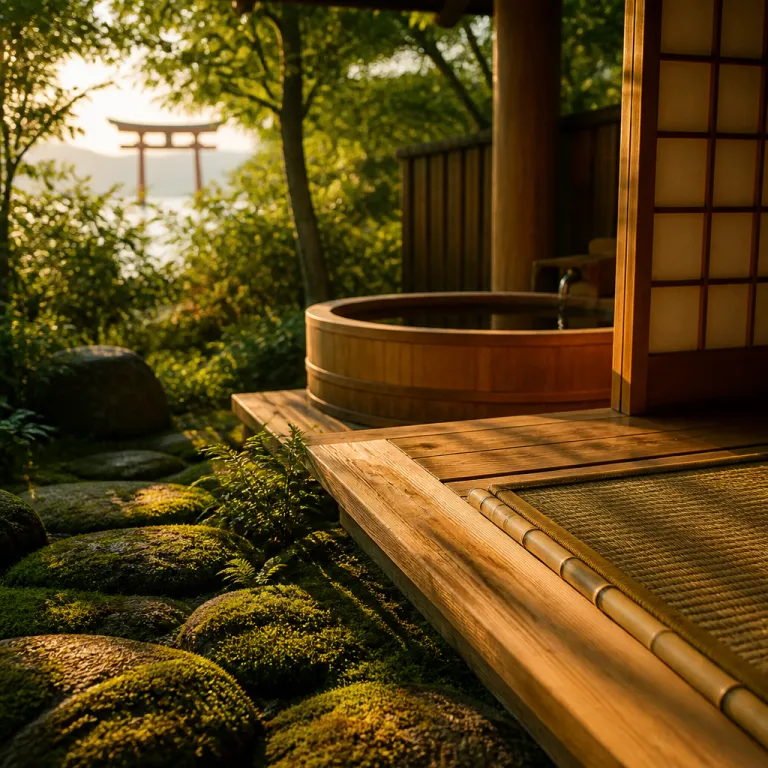
Section 1 – What makes an Itsukushima ryokan stay so special ?
On Miyajima Island, staying in an Itsukushima ryokan turns a simple night into a refined journey. The island setting, framed by the Seto Inland Sea and the floating torii gate, gives every room and every bath a sense of theatre that few Japanese hotels can match. Guests feel the rhythm of the tides and the glow of Itsukushima Shrine as part of their private stay.
Among the most polished ryokans on Miyajima, Itsukushima Iroha stands out for its balance of traditional Japanese hospitality and contemporary comfort. This modern ryokan Miyajima property sits about a five minute walk from Miyajima ferry terminal, which keeps the arrival smooth even with luggage after the short crossing from Hiroshima. According to the official address listing on the property’s Japanese website and regional tourism brochures, the inn is located at 589-4 Miyajima cho, Hatsukaichi, Hiroshima Prefecture, and typical nightly rates for a room with two meals usually fall somewhere between the mid and upper range for regional hot spring inns, depending on season and room type.
The best Itsukushima ryokan experiences respect local culture while embracing discreet modernity. You sleep in a Japanese style room with futon or low beds, yet you still enjoy reliable Wi-Fi, climate control, and thoughtful lighting that flatters the natural wood and paper textures. Many rooms guests choose here face the inland sea, so you can slide open the shoji and watch the Seto Inland waters shift colour as lanterns flicker near the shrine.
Section 2 – Location, access, and how to read the map before booking
Understanding the geography of Miyajima is essential before you confirm any booking at an Itsukushima ryokan. The compact island stretches between the ferry terminal, the shopping streets, and the sacred precinct around Itsukushima Shrine, so a few hundred metres can change the feel of your stay. Properties closer to the torii gate offer dramatic views, while those slightly inland often provide quieter nights and more secluded hot spring style facilities.
Itsukushima Iroha occupies a privileged address at 589-4 Miyajima cho in Hatsukaichi, Hiroshima, only a short stroll from the pier and the main shrine approach. When you open Google Map and search for ryokans on Miyajima, you will notice how this ryokan Miyajima option sits almost midway between the ferry terminal and the vermilion torii gate, which makes it ideal for sunrise and evening walks. That central position also means you can return to your room within a minute walk or two if sudden rain appears or if you wish to change before dinner.
For travellers comparing an Itsukushima ryokan with a grand hotel in Hiroshima city, the key difference lies in immersion rather than distance. The Miyajima ferry crossing from the mainland takes roughly ten minutes, and most visitors arrive via JR Miyajimaguchi Station or Hiroden streetcar stops that connect with the pier in about five minutes on foot. One guest described the moment of arrival as “stepping into a lantern lit stage set, where the sea, the shrine, and the inn all feel like parts of the same scene,” a reaction that captures why staying overnight on the island feels so different from a day trip.
Section 3 – Rooms, views, and how to choose the right style
Room selection defines the character of any Itsukushima ryokan stay, especially when you want both comfort and a sense of place. At Itsukushima Iroha, there are only 18 rooms listed in the property outline on official booking channels, which keeps the scale intimate and allows staff to tailor service to individual guests. Fewer rooms also mean that availability can tighten quickly, so it is wise to check availability as soon as your travel dates to Miyajima Island are fixed.
You will typically choose between a fully traditional Japanese style room with tatami and futon, or a hybrid style room that blends Western beds with a traditional Japanese layout. Some rooms guests favour most face the Seto Inland Sea and frame the torii gate in the distance, while others look toward the town and wooded slopes behind the shrine. When you compare these options, think about whether you value a sea facing bath, a private balcony, or simply a quiet corner where sliding doors and soft lighting create a cocoon after a long day.
Travellers who usually book a city hotel may be unsure how to balance budget and experience at a ryokan on Miyajima. A practical approach is to decide in advance which elements matter most to you, such as a private onsen style bath, a guaranteed sea view, or extra floor space for families, then match those priorities to the room categories on the booking page. Once you have that framework, returning to the booking form for your chosen Itsukushima ryokan becomes easier, because you can focus on the room features that genuinely enhance your stay rather than chasing every upgrade.
Section 4 – Onsen etiquette, private baths, and the rhythm of the day
Bathing is the quiet heart of any Itsukushima ryokan experience, even when the property uses heated water rather than a natural hot spring source. At Itsukushima Iroha, open air baths and carefully designed indoor facilities allow guests to soak while watching the light shift over the inland sea. The combination of warm water, sea air, and the distant outline of Itsukushima Shrine creates a meditative mood that many travellers remember long after they leave Miyajima.
Public onsen areas usually separate men and women, with clear signage and amenities such as stools, showers, and toiletries for pre bath washing. Guests who feel shy about communal bathing can reserve a private onsen or a private bath attached to their room, which is especially appealing for couples or families who want to share the experience together. Some style room categories at this ryokan Miyajima property include semi open air baths on the balcony, so you can soak while listening to waves from the Seto Inland Sea without leaving your suite.
Solo travellers often wonder whether an Itsukushima ryokan or other ryokans on Miyajima will feel comfortable when visiting alone. In practice, staff are accustomed to welcoming single guests, and the structured rhythm of meals and bathing can be particularly soothing when you travel at your own pace. A simple routine works well: arrive by mid afternoon, bathe before dinner, enjoy kaiseki in your yukata, then return to the bath later in the evening when it is quieter, applying the same basic etiquette each time you step into the bathing area.
Section 5 – Dining, seasonality, and the pleasure of kaiseki on Miyajima
Food is where an Itsukushima ryokan truly expresses its sense of place, and Miyajima is no exception. The island sits within Hiroshima Prefecture, which is renowned for oysters, seasonal fish from the Seto Inland Sea, and vegetables from nearby farms. When you stay at a traditional Japanese inn such as Itsukushima Iroha, dinner usually takes the form of kaiseki, a multi course meal that showcases these ingredients with precise technique and elegant presentation.
At this ryokan Miyajima property, chefs work closely with local seafood suppliers and artisans to present dishes that change with the tides and the calendar. A typical menu might include grilled local fish, delicately steamed vegetables, and small plates that echo the colours of the shrine and the surrounding forest. Because the number of rooms guests is limited, the kitchen can often adjust seasoning and pacing to individual preferences, which is one of the quiet luxuries that separates an Itsukushima ryokan from a larger grand hotel on the mainland.
Breakfast continues this focus on regional flavours, often with grilled fish, rice, miso soup, and small side dishes served in a Japanese style that feels both nourishing and unhurried. If you have dietary restrictions, it is essential to mention them during booking so the team can plan alternatives without compromising the rhythm of the meal. For travellers who want to balance such indulgent dining with more modest stays elsewhere, thinking ahead about where to splurge on kaiseki and where to choose simpler accommodation can help you allocate your budget so that one or two nights on Miyajima Island become the highlight of a longer journey.
Section 6 – Hidden gem details and how to secure the right stay
Beyond the obvious appeal of Itsukushima Shrine and the famous torii gate, an Itsukushima ryokan stay reveals quieter layers of Miyajima. Itsukushima Iroha, for example, combines natural materials with designer furnishings, which gives corridors and lounges a calm yet contemporary feel. The property operates year round, so you can choose between cherry blossom views, summer greenery, autumn foliage, or the crisp clarity of winter skies over the Seto Inland Sea.
Because there are only 18 rooms, booking strategy matters if you want specific views or a private onsen. The most effective approach is to check availability as soon as ferry and train times from Hiroshima are fixed, then use a detailed Google Map view to confirm walking distances from the ferry terminal and the shrine. As a rule of thumb, booking three to six months ahead for weekends, national holidays, and cherry blossom or autumn foliage seasons gives you a better chance of securing a sea view, while quieter weekdays can sometimes be arranged closer to your travel dates.
When planning, many travellers ask practical questions about amenities and proximity to landmarks, and the property itself offers clear answers such as “Tatami rooms, open-air baths, and kaiseki dining.”, “A short walk from the shrine.”, and “Some rooms offer views of the torii gate.”. These concise statements capture why this Itsukushima ryokan has become a reference point among ryokans on Miyajima for travellers who value both authenticity and comfort. Once you align your expectations with these details, your stay on Miyajima Island becomes less about checking sights and more about inhabiting a traditional Japanese rhythm for a few unhurried days.
Key figures for an Itsukushima ryokan stay on Miyajima
- Itsukushima Iroha offers 18 rooms in total, which keeps guest numbers low and allows staff to provide more personalised service compared with larger hotels in Hiroshima city (room count based on Japan Ryokan Guide listings and the property’s own outline).
- The ryokan sits about a five minute walk from Miyajima Pier, meaning most guests can reach their room within roughly 400 metres of leaving the Miyajima ferry, even when carrying luggage (distance information from regional tourism listings and official access descriptions).
- Miyajima Island receives several million visitors each year, yet only a fraction stay overnight in a ryokan, so securing a room at an Itsukushima ryokan can significantly change your experience of the shrine area after day trippers leave (visitor data from Hiroshima Prefecture tourism reports).
- Itsukushima Shrine and its torii gate are part of a UNESCO World Heritage Site, placing this cluster of ryokans on Miyajima among a small number of hot spring and inn destinations globally that sit within protected cultural landscapes (UNESCO World Heritage Centre data).
FAQ about staying at an Itsukushima ryokan
How close is Itsukushima Iroha to Itsukushima Shrine and the torii gate ?
Itsukushima Iroha is located within a short walking distance of both Itsukushima Shrine and its iconic torii gate, with most guests reaching the shrine area in just a few minutes along level streets. This proximity allows you to visit at dawn or after dark, when day trip crowds have thinned and the atmosphere feels more contemplative.
What amenities does this Itsukushima ryokan provide for guests ?
The property offers tatami rooms, open air baths, and kaiseki dining, combining traditional Japanese elements with modern comforts such as climate control and Wi-Fi. Many rooms guests choose also feature sea views or semi open air baths, which enhance the sense of retreat on Miyajima Island.
Is the water at the ryokan a natural hot spring onsen ?
Facilities on Miyajima vary, and some inns use heated water rather than a true natural hot spring source, while still following onsen style bathing customs. Regardless of the source, the design of the baths, the view over the Seto Inland Sea, and the quiet etiquette create a restorative experience similar to that of a classic hot spring resort.
When should I book to secure a sea view room at an Itsukushima ryokan ?
Because there are only 18 rooms at Itsukushima Iroha and a limited number with direct sea or torii gate views, you should check availability several months in advance for weekends, holidays, and peak foliage or cherry blossom periods. Midweek dates outside major holidays usually offer more flexibility, but early booking still gives you the best choice of style room and view.
Can solo travellers feel comfortable staying at a ryokan on Miyajima Island ?
Solo travellers are welcomed at Itsukushima Iroha and other ryokans on Miyajima, and the structured rhythm of meals and bathing often suits independent guests. Staff are used to explaining onsen etiquette and meal timings clearly, so you can relax into the traditional Japanese experience without feeling out of place.
References : Japan National Tourism Organization ; Hiroshima Prefecture Tourism ; UNESCO World Heritage Centre ; Japan Ryokan Guide.