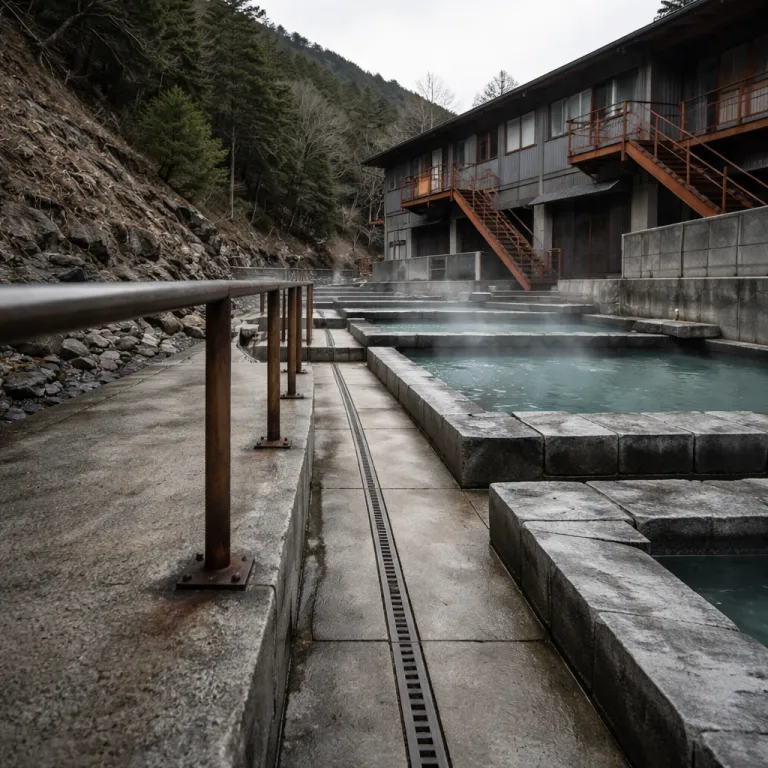
Hot spring inn vs wellness retreat: why the label matters more than the logo
When you compare a traditional hot spring inn vs wellness retreat marketing, you are really comparing two philosophies. One is built around the spring itself, the other around a branded idea of wellness with scheduled activities and curated playlists. For business leisure travelers extending a Tokyo or Osaka trip, that difference shapes every hour of the day.
Traditional Japanese hot springs inns are usually small, family run properties where the rooms are designed around proximity to the waters, not proximity to a spa reception desk. These inns sit where the geothermal hot veins of the earth rise closest to the surface, so the natural hot flow dictates architecture, rhythm, even the way overnight guests start morning bathing rituals. In contrast, a wellness resort can be located almost anywhere, then pipe in mineral waters or offer spring themed pools as one amenity among many.
Japan’s tourism authorities count around 3 000 traditional hot spring inns nationwide, and most deliberately avoid the wellness retreat label. According to the Japan Tourism Agency’s onsen accommodation statistics (latest consolidated figures published 2022), these inns represent a significant share of rural lodging stock, yet their owners still describe the inn as existing because of the spring, not because of a concept, and insist that the healing waters are part of a cultural continuum rather than a lifestyle product. That is why event data from regional tourism boards such as Oita and Gunma, based on annual guest-satisfaction surveys of several thousand respondents, consistently shows higher repeat stays at properties where the spring pools and the rooms located closest to them are the quietest spaces on site.
The dataset used by hot-spring-inn.com captures this stance clearly through verified expert commentary and structured property reviews. One core explanation is explicit: “Why do traditional inns avoid 'wellness retreat' label? To preserve cultural identity and traditional practices.” The same dataset underlines what guests actually seek in these springs resorts: “What experiences do these inns offer? Authentic hospitality, natural hot springs, local cuisine.” Each entry is compiled from owner interviews, on-site inspections, and guest feedback collected during the previous 12–18 months.
For an executive used to five star city rooms and branded spas, this can feel almost austere at first. There may be no long wellness menu, no scented candles by the spring pools, and no staff member urging you to book a mindfulness class. Yet guests enjoy a different kind of richness here, one where the mineral rich waters, the silence, and the view of cedar forests or snow covered roofs do the work that aromatherapy tries to imitate.
Think of the best hot springs inn vs wellness retreat comparison as geology versus choreography. At a classic Japanese inn, the mineral waters rise from a located original source that has often been mapped for centuries, and the inn simply frames that gift from mother nature. At a wellness resort, the choreography of treatments, activities, and branded products can be impressive, but the water itself is rarely the protagonist.
For travelers who care about the integrity of the spring, this distinction is not academic. It determines whether your room opens directly onto a small balcony with a private rotenburo fed by crystal clear natural mineral waters, or whether you walk through a busy lobby to reach generic pools with a soundtrack. It also influences whether your included stay focuses on slow bathing and seasonal kaiseki, or on package deals that bundle massages, facials, and fitness classes.
On our editorial platform dedicated to Japanese hot springs, this is why we foreground the source, temperature, and mineral profile of the waters before we mention any spa services. Our role is to help you read property descriptions more critically so that the geothermal hot energy, the warm steam, and the famous natural setting are aligned with your expectations, not just your loyalty program. When you filter properties, treat the word wellness as a style choice, but treat the word spring as a geological fact.
How spa services change when the spring defines the experience
Once you understand the philosophical gap in the hot spring inn vs wellness retreat debate, spa services start to look very different. In a wellness resort, treatments lead and the pools follow, while in a true springs resort the pools and baths are the main event and any massage is a supporting act. This matters for business travelers who may only have one day and one night to reset between meetings.
At traditional Japanese inns, spa services are usually minimal and intentionally quiet, often offered in just one or two rooms located away from the main bathing areas. The focus remains on repeated, unhurried immersion in mineral waters that emerge at naturally hot temperatures, sometimes rich hot with sulfur, sometimes gentle and crystal clear with bicarbonate. Guests enjoy alternating short soaks with rest in tatami rooms, letting the healing waters work gradually rather than chasing instant transformation.
Compare that with a large wellness resort where the spa occupies a central wing and the spring pools are one of many zones. Here, the wellness narrative often layers on aromatherapy, branded oils, and signature rituals that could be transplanted to any property with or without hot springs. The water may still be geothermal hot and mineral rich, but it competes with playlists, lighting schemes, and a long menu of activities.
For executives used to structured schedules, this can feel reassuring, yet it risks diluting what makes thermal springs unique. The more the resort leans on generic wellness language, the less attention is paid to the specific mineral profile, the flow rate, and the way mother nature shaped the valley or coast where the inn is located. In Japan, many owners consciously resist this trend to protect both cultural identity and the integrity of their spring.
On our site, we therefore describe spa services in relation to the spring, not as a separate attraction. A property might offer shiatsu in a simple treatment room, timed so that overnight guests can start morning bathing, rest, then receive bodywork while the body is still warm from the baths. Another inn may skip formal treatments entirely, instead providing wooden decks where a guest can stretch quietly between soaks, using the view of pines or sea as the only therapy.
For travelers who still want a more international spa overlay, there are hybrid options that respect the water first. Some premium hot springs hotels, including global brands, now design their spas so that every treatment either begins or ends with immersion in natural mineral pools fed by geothermal hot sources. A detailed guide to this more polished style of stay can be found in our review of refined relaxation at hot springs Marriott hotels, where the balance between brand standards and spring authenticity is examined closely.
When you book, read beyond the word wellness and look for specifics about the waters. Does the inn explain whether the mineral waters are sodium chloride, bicarbonate, or sulfur based, and whether the spring pools are rotenburo under open sky or indoor tiled baths. Does the property mention how many rooms are located near the baths, or whether the included stay allows unlimited access for overnight guests without time slots.
These details tell you whether the spa services are tailored to the spring or simply layered on top. A true hot springs inn vs wellness retreat comparison always comes back to this question: is the water the star, or the set decoration. For travelers who value depth over trend, choosing the former usually leads to more meaningful rest and higher long term satisfaction.
What business leisure travelers should prioritize when choosing their spring stay
Executives extending a business trip often ask whether a hot spring inn vs wellness retreat stay will leave them more rested for Monday’s meetings. The honest answer is that the right inn, with the right waters and the right silence, usually outperforms a wellness resort packed with scheduled activities. The key is knowing what to prioritize when you scroll through photos of pools and rooms.
Start with the source, not the spa menu, and look for clear information about the spring itself. Properties that lead with the geology usually specify whether the natural hot waters are free flowing or recirculated, whether the mineral content is gentle enough for long soaks, and whether the baths are separated by gender or mixed. When an inn describes its healing waters in detail and explains how guests enjoy them throughout the day, you are looking at a place where the spring still defines the experience.
Next, examine the layout of the rooms and shared spaces in relation to the baths. A serious springs resort will often have some rooms located directly above or beside the bathing area, minimizing the distance between your futon and the first soak of the morning. For a business traveler arriving late from a Shinkansen, being able to slip from room to spring pools in under a minute can make the difference between a perfunctory dip and a genuinely restorative night.
Silence is another non negotiable factor that rarely appears in wellness marketing copy. Traditional inns are usually located in valleys, coastal inlets, or mountain towns where mother nature still sets the soundscape, and where the only noise near the pools is wind, water, and the occasional conversation. Wellness resorts, especially those attached to large hotels, may have more activities, more restaurants, and more background music, which can erode the meditative quality of the baths.
For those who still want some structure, choose properties that integrate gentle activities around the spring rather than away from it. A short forest walk before you start morning bathing, a simple stretching session on a deck overlooking the waters, or a quiet tea ceremony between soaks can all deepen the effect of the mineral rich baths. These experiences keep your attention on the interplay between body temperature, warm air, and geothermal hot water, rather than on external entertainment.
Our field reviews show that overnight guests who bathe three times in one day, with rest and light meals in between, report better sleep and less jet lag than those who book multiple treatments in a wellness resort. The pattern is simple: short, repeated immersion in natural mineral waters, followed by cool down and hydration, allows the cardiovascular system to adapt gradually. This is especially valuable for executives whose baseline stress levels and travel fatigue are high.
If you prefer a more international hotel environment but still want serious springs, consider properties where the thermal facilities are integrated into a full service hotel and spa. Our in depth look at refined relaxation at a hot springs hotel and spa in Hot Springs, Arkansas illustrates how a city based property can still honor its famous natural waters. The lesson translates well to Japan: choose places where the water history is older than the brand.
When you finally book, treat the room as a base camp for bathing rather than the main attraction. A simple tatami room with a good futon, a quiet view, and easy access to the baths will usually serve you better than a suite far from the springs. In the hot spring inn vs wellness retreat equation, prioritize proximity to the source, clarity about the mineral profile, and the promise of unhurried time in the pools over any long list of treatments.
Examples of inns that let the spring speak louder than wellness branding
To see the hot spring inn vs wellness retreat contrast in practice, look at how the most respected Japanese properties present themselves. Their websites and booking pages lead with the spring name, the mineral composition, and the view from the open air baths, not with wellness slogans. This is not nostalgia; it is a deliberate strategy to keep the focus on what cannot be replicated elsewhere.
In classic onsen towns such as Kusatsu, Kinosaki, or Gero, many inns are located within a short walk of public baths fed by famous natural springs. These properties often have only a handful of rooms, each room arranged so that guests enjoy easy access to the indoor and outdoor pools without passing through busy corridors. The included stay typically covers dinner and breakfast, encouraging overnight guests to align their bathing rhythm with the kitchen’s seasonal menus.
Inside the baths, the design language is restrained and precise. Stone edged spring pools hold mineral waters that may be milky with sulfur, tea colored from iron, or crystal clear and almost invisible except for the steam rising from the surface. Lighting is low, voices are hushed, and the only activities encouraged are soaking, rinsing, and quietly contemplating the surrounding garden or mountain silhouettes.
These inns rarely use the word wellness, yet they deliver outcomes that many wellness resorts promise but struggle to achieve. Repeat guests often describe a sense of deep reset after just one day and night, especially when they start morning bathing before breakfast and return to the waters again before sleep. The combination of warm immersion, cool air on the face, and the steady presence of mother nature around the baths creates a physiological and psychological shift that no playlist can simulate.
For travelers curious about how different cultures structure their bathing rituals, our long form guide to how the world bathes differently offers useful context. It shows how Japanese onsen culture, Korean jjimjilbang, and Middle Eastern hammam traditions each place water, heat, and social space in a different hierarchy. Understanding these nuances helps you read between the lines when a property calls itself a springs resort or a wellness sanctuary.
On a curated platform focused on Japanese hot springs, our curation criteria reflect this bias toward water first. We prioritize inns where rooms are located to maximize access to the baths, where the spring source is described in detail, and where the design allows a guest to move from futon to pools with minimal friction. We also look for properties that respect local customs, embrace simplicity, and work with local artisans rather than chasing global spa trends.
For couples seeking a romantic escape, this water centric approach can be especially powerful. A private rotenburo on a terrace, filled with rich hot natural mineral waters and framed by cedar or snow, offers intimacy without performance, and the silence becomes part of the conversation. In these settings, the hot spring inn vs wellness retreat question answers itself: the place that trusts its spring enough to say less usually gives you more.
Key figures and context for hot spring inns and wellness travel
- Japan hosts around 3 000 traditional hot spring inns, according to the Japan Tourism Agency, representing one of the densest concentrations of thermal accommodations in the world and underscoring how deeply springs are woven into everyday travel. Readers can consult the agency’s 2022 onsen accommodation statistics for the latest consolidated figures.
- Global thermal spring tourism is estimated as a standalone market worth tens of billions of dollars, distinct from the broader wellness tourism segment, which shows that many travelers choose destinations primarily for their mineral waters rather than for spa branding. The Global Wellness Institute’s “Global Wellness Tourism Economy” series provides the most frequently cited breakdown of this distinction.
- Industry surveys such as the Global Wellness Institute’s periodic “Global Wellness Tourism Economy” reports, which analyze data from tens of thousands of travelers and multiple national tourism boards, consistently report higher repeat visit rates at properties that emphasize authentic hot springs experiences and cultural immersion, compared with resorts that market generic wellness packages without detailing their spring sources.
- Data from Japanese regional tourism boards indicates that inns focusing on natural hot baths, local cuisine, and quiet rooms located near the pools achieve stronger guest satisfaction scores among business leisure travelers than larger resorts with extensive but less spring focused facilities. Recent summaries from Oita and Gunma prefectures, based on annual guest-satisfaction surveys, are frequently cited examples of this pattern.