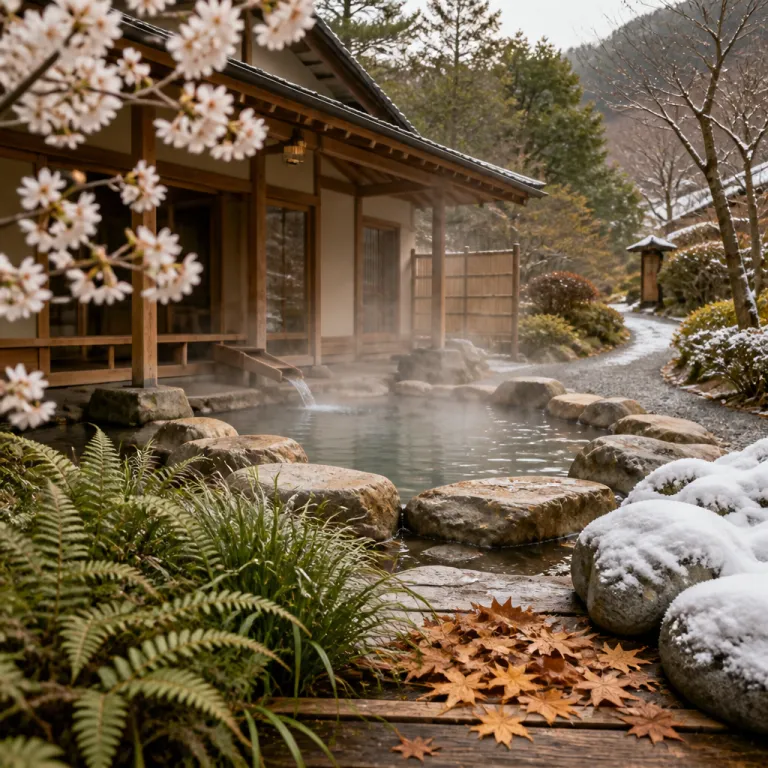
Reading the onsen calendar in Japan: when price follows the steam
Timing when to book an onsen ryokan in Japan is the difference between a serene, great value ryokan stay and a fully booked property charging peak premiums. Across the onsen ryokans that matter to business leisure travelers, the demand rhythm is remarkably consistent, and understanding those months will help you decide exactly when you should book ryokan stays for the best balance of rate and atmosphere. Think of each japanese ryokan as a small, high touch ecosystem where every room, every set of hot spring baths and every sequence of kaiseki meals is priced according to how many people want to be there that night.
New Year, Golden Week and Obon sit at the top of the pricing pyramid, while the autumn foliage season in Japan is the annual peak for many ryokans that overlook valleys and maple lined rivers. According to Japan Ryokan Guide, Obon week from 13 to 16 August sees ryokan prices jump 20 to 40 percent, while June is the cheapest booking window of the year at roughly 20 to 30 percent below autumn peak rates, and that same source confirms that autumn foliage season is the annual pricing peak for many properties. When you plan travel Japan itineraries that include both work and leisure, mapping your stay against this calendar lets you decide when book an onsen ryokan for a quiet weekday room or when to pay more for a front row view of cherry blossom or snow.
Weekends are the second major driver of rates, especially in classic hot spring towns within two or three hours of Tokyo or Kyoto. Saturday nights at a traditional japanese inn often sell out months ahead, while Sunday night stays can be significantly cheaper even during busy months because domestic guests head home after the weekend. If your schedule is flexible and you can book months in advance, a Sunday to Tuesday ryokan stay will usually secure a better room, a more attentive onsen experience and a calmer atmosphere around the open air baths.
Spring in Kyoto and beyond: cherry blossom premiums and smart shoulder dates
Spring is when to book onsen ryokan stays if you want that cinematic mix of cool air, hot springs and pale pink cherry blossom drifting over an open air pool. In Kyoto and other classic hanami cities, japanese ryokan properties with even a glimpse of blossom lined canals will raise rates as soon as the forecasted bloom dates are announced, and the most atmospheric ryokans near temples or rivers can sell every room very early. For travelers who want the blossom experience without the highest premiums, the trick is to book ryokan stays in the late March and early April shoulder, then target Sunday or weekday nights rather than Fridays and Saturdays.
Japan Ryokan Guide notes that June is the cheapest booking window of the year, roughly 20 to 30 percent below autumn peak rates, and that context matters when you compare a spring rate to a later season. If you are planning travel Japan for business in Tokyo or Osaka, consider extending your trip into late March or the first days after the main cherry blossom wave, when onsen ryokans in nearby regions may have better availability and more flexible booking terms. This is also when book months ahead really pays off, because the best room private open air baths and suites with private onsen facilities are snapped up first by domestic guests who know the pattern.
For a more discreet spring baths experience, look at inland hot spring towns rather than the most famous Kyoto districts, and use platforms such as Rakuten Travel to compare ryokan japan options across several prefectures. A japanese ryokan in a smaller valley may offer larger rooms, more elaborate meals and quieter hot spring access for the same rate as a compact property in central Kyoto during blossom season. To understand why September can be an even better value window after summer, study a detailed guide such as this analysis of why the month after summer is the real secret season at an onsen ryokan, then compare those insights with your spring options.
Summer heat, Obon spikes and the case for coastal and island ryokans
Summer in Japan brings humid air, lush green mountains and a very specific pattern in onsen ryokan pricing that every executive traveler should understand. Early summer in June is often a value period for ryokans because of the rainy season, and Japan Ryokan Guide reports that June rates sit around 20 to 30 percent below the autumn foliage peak, which makes it a strong candidate when you want to book ryokan stays around business meetings. The water in the hot springs is still hot and mineral rich, but the competition for each room is lower, especially on weekdays.
Everything changes around Obon, when families travel japan domestically to ancestral hometowns and coastal resorts, and the same source notes that Obon week from 13 to 16 August sees ryokan prices jump 20 to 40 percent. If you plan to stay at a japanese ryokan during that period, you should book months in advance, especially if you want a room private open air bath or a suite with a private onsen overlooking the sea. For many onsen ryokans, this is when book decisions must be made very early, because cancellations are rare and late booking options are limited to less desirable room categories or properties far from the main hot springs.
Coastal ryokans and island retreats such as those on Miyako Island offer a different summer rhythm, blending hot spring style baths or spring fed pools with warm ocean water and long evenings. Here, the best strategy is to secure your booking early for peak weekends, then watch for midweek gaps where a property will quietly release a room at a softer rate to keep occupancy high. If you are comparing these japanese ryokan style stays with international geothermal retreats, a resource like this comparison of how Jacumba hot springs hotel prices compare for luxury wellness escapes can help you benchmark value, even though the cultural context and meals structure are very different.
Autumn foliage and winter snow: paying for peak views versus quiet value
Autumn is the answer most insiders give when asked when to book onsen ryokan stays for the most dramatic scenery, and it is also when rates climb to their highest levels. Japan Ryokan Guide confirms that autumn foliage season is the annual pricing peak, which means that a room with a balcony over a river of red and gold maples will cost more than the same room in June or early winter. If you want that full ryokan stay experience with kaiseki meals, hot springs and a traditional japanese room layout during koyo, you should book months ahead and accept that the rate reflects both demand and the short window of perfect color.
Winter brings a different kind of luxury, especially in mountain ryokans where snow falls into the open air baths and the contrast between the hot water and the cold air is intense. These japanese ryokan properties often see strong weekend demand from skiers and domestic couples, but midweek nights outside New Year can be surprisingly good value compared with autumn, particularly if you are willing to take a standard room without a room private onsen. When you plan travel Japan for work in cities like Sapporo or Nagano, extending your stay by one or two nights into a nearby hot spring town can turn a routine trip into a restorative onsen experience without paying autumn premiums.
Reading the rate sheet correctly is crucial in these seasons, because many ryokans price per person and include two elaborate meals, while some newer properties offer room only or breakfast only plans. When you compare booking options on Rakuten Travel or a specialist luxury platform, make sure you are matching half board with half board, and checking whether private onsen access is included or requires an extra onsen book slot. For travelers who care about the cultural context of these hot springs, it is also worth understanding how future UNESCO recognition of onsen regions might influence both demand and conservation, as explored in this guide to what UNESCO status would mean for your next onsen trip.
Weekdays, weekends and the business leisure advantage
For executives blending work and leisure, the most powerful lever in deciding when to book onsen ryokan stays is not the month but the day of the week. In many hot spring towns within reach of Tokyo, Osaka or Kyoto, Saturday nights are effectively a separate pricing category, while Sunday through Thursday can be treated as a quieter, more value focused tier. If your meetings finish on a Friday, consider shifting your ryokan stay to Sunday and Monday, when the same room and the same hot spring access may cost less and feel more relaxed.
Business travel Japan patterns can work in your favor, because corporate stays tend to concentrate in city hotels from Monday to Thursday, leaving onsen ryokans more reliant on domestic leisure guests at weekends. By extending a work trip into a shoulder window, you can book ryokan stays that align with lower demand, especially in June, late May or early December, when rates sit well below the autumn peak documented by Japan Ryokan Guide. This is also when book months ahead is less critical, and you may find that a late booking still secures a room private open air bath or a japanese ryokan suite with a view.
When you evaluate whether a property will suit a business leisure stay, look beyond the headline rate and study the structure of the meals and the onsen facilities. A traditional japanese ryokan that includes kaiseki dinners and elaborate breakfasts in the rate may represent better value than a cheaper room only property once you factor in restaurant costs and the quality of the hot springs. For executives who need to work during their stay, consider whether the ryokan offers quiet communal spaces or in room seating where you can open a laptop without compromising the ritual of changing into yukata and moving between indoor and open air spring baths.
How far ahead to book, and reading rates like an insider
Knowing when to book onsen ryokan stays is only half the equation ; the other half is understanding how far ahead to commit and how to read the rate grid. For the absolute peaks such as New Year, Golden Week, Obon and the height of autumn foliage, assume that the best ryokans will open reservations many months in advance and that japanese guests will move quickly to secure their preferred room categories. If you want a suite with a private onsen, a room private dining option or a specific view, you should book months ahead and treat the reservation as a key part of your travel Japan planning rather than a last minute add on.
Shoulder seasons and midweek stays offer more flexibility, and this is where a late booking strategy can work, especially in June or early winter when demand is softer and properties may quietly release promotions. Platforms such as Rakuten Travel allow you to track rate movements across multiple ryokans, and you will often see that a property will adjust prices for specific dates where occupancy is lagging, particularly for standard rooms without open air baths. When you see a rate that includes both dinner and breakfast, remember that you are effectively pre paying for two restaurant quality meals, which changes the value equation compared with a city hotel room only rate.
Always read the fine print on hot spring access, because some onsen ryokans operate large communal hot springs with rotating male and female hours, while others offer bookable private onsen slots or in room open air baths that can be reserved in advance. If a japanese ryokan lists an onsen book system for private baths, check whether those slots are guaranteed with your room type or allocated on arrival, as this will affect how relaxed your stay feels. By combining this granular understanding of rates, meals and hot springs with the broader seasonal pricing map, you will know exactly when book and how to secure the ryokan japan experience that matches both your budget and your expectations.
Key figures for timing an onsen ryokan stay
- Obon week from 13 to 16 August sees ryokan prices jump 20 to 40 percent compared with surrounding summer dates, according to Japan Ryokan Guide, which makes early booking essential for that period.
- June is the cheapest booking window of the year for many onsen ryokans, with average rates roughly 20 to 30 percent below the autumn foliage peak, based on data from Japan Ryokan Guide.
- Autumn foliage season is the annual pricing peak for numerous ryokans in scenic regions, as reported by Japan Ryokan Guide, reflecting intense domestic and international demand for koyo views.
- Sunday night stays at ryokans in popular regions often undercut Saturday rates significantly, with many properties applying a distinct weekend premium to Saturdays while treating Sundays as off peak.
- Half board ryokan rates that include two kaiseki meals can represent strong value compared with room only city hotels once you factor in the cost of equivalent multi course dining experiences.
FAQ
How far in advance should I book an onsen ryokan for peak seasons ?
For New Year, Golden Week, Obon and the height of autumn foliage, plan to book an onsen ryokan at least three to six months in advance, especially if you want a room with a private onsen or a specific view. The most desirable japanese ryokan properties often open reservations early and domestic guests move quickly, so late booking options may be limited to less attractive rooms or secondary dates. For shoulder seasons such as June or early winter, a shorter lead time is usually sufficient, particularly for midweek stays.
Is June really a good month to stay at an onsen ryokan ?
June is one of the best value months for an onsen ryokan stay because it falls during the rainy season, when demand softens and rates drop. Japan Ryokan Guide reports that June prices are roughly 20 to 30 percent below the autumn foliage peak, which means you can often secure larger rooms or open air baths for the same budget. While you may encounter showers, the combination of warm air and hot springs can be very atmospheric, especially in lush mountain valleys.
Are weekends always more expensive than weekdays at ryokans in Japan ?
In most popular hot spring regions, Saturday nights are consistently more expensive than weekdays because domestic leisure guests concentrate their travel on weekends. Sunday through Thursday often carry lower rates and a calmer atmosphere, particularly outside major holiday periods and school vacations. If your schedule allows, shifting your ryokan stay to Sunday and Monday can deliver better value and easier access to communal hot springs.
How should I compare ryokan prices that include meals with hotel room only rates ?
Ryokan rates are typically quoted per person and often include both dinner and breakfast, usually in the form of elaborate kaiseki meals that would be costly if ordered à la carte. When you compare these half board prices with room only hotel rates, factor in the cost of equivalent dining and the convenience of eating on site. Once you account for meals and hot spring access, a higher looking ryokan rate can represent strong overall value.
Do I need a room with a private onsen, or are communal baths enough ?
A room with a private onsen offers maximum privacy and flexibility, which many business leisure travelers appreciate after long workdays, but it is not essential for a high quality onsen experience. Communal baths at well run japanese ryokan properties are often larger, more scenic and carefully maintained, with both indoor and open air pools fed by natural hot springs. If budget is a concern, choosing a standard room and relying on communal baths can free funds for a longer stay or a higher grade of meals.