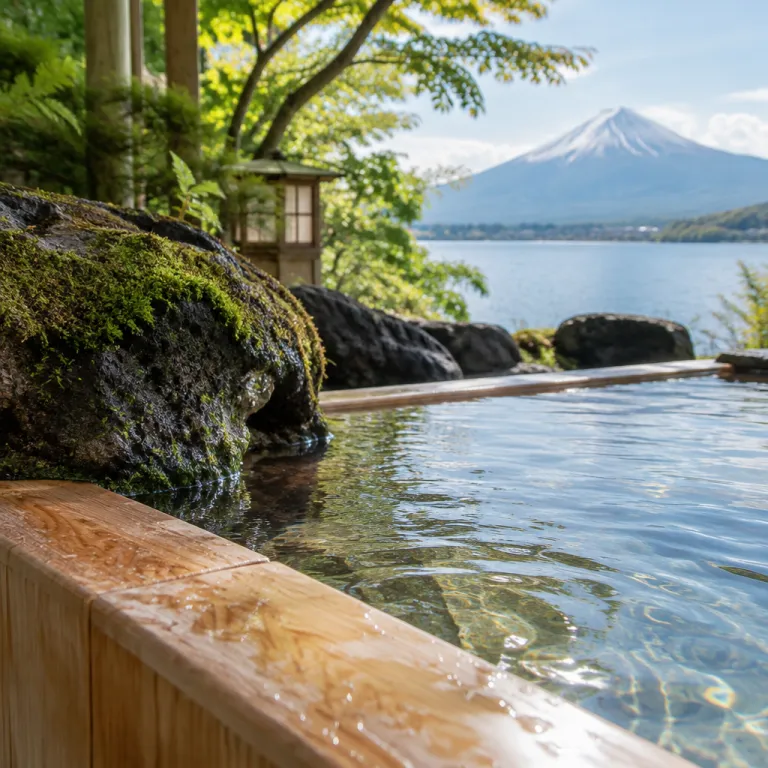
Choosing a ryokan Mt Fuji stay around lake Kawaguchi
Staying in a ryokan Mt Fuji property near lake Kawaguchi gives you an immediate sense of calm. Around this lake in Japan, the shoreline curves gently and frames Fuji in a way that feels almost theatrical, especially when clouds lift suddenly after a hot afternoon. For many travelers, this is the most convenient area to book a hotel with a guaranteed Fuji view and easy access to hot springs.
The town of Fujikawaguchiko sits on the northern side of the lake, where a ryokan with a direct Fuji view benefits from the mountain rising behind the water like a painted screen. When you choose a stay in this area, focus on whether the room category explicitly mentions a lake view or a Fuji view, because not every room in every hotel faces the mountain. Properties such as Shuhokaku Kogetsu and Kawaguchiko Ryokan Ubuya are known for arranging every room so that guests can enjoy both the lake and Fuji from their private spaces.
For a luxury oriented stay, look for an onsen ryokan that combines traditional tatami rooms with large windows and open air baths facing the lake. Many travelers prefer to stay ryokan style here rather than in a standard hotel, because the rhythm of kaiseki dinners and hot spring bathing matches the slow movement of clouds over Fuji. If you plan to arrive by car, check in advance whether your chosen ryokan Mt Fuji property offers free parking and how steep the nearby roads are in winter.
Signature luxury ryokan with a direct Fuji view
Among the most sought after ryokan Mt Fuji stays, Shuhokaku Kogetsu stands out because every room faces the mountain and the lake. This lakeside ryokan offers open air baths where the hot spring water steams in the cold air while Fuji appears almost close enough to touch, which creates a powerful sense of place that many city hotels in Japan cannot match. One recent guest described watching the summit “change from pale pink to deep indigo without leaving the bath,” a detail that captures how immersive the setting can feel.
Kawaguchiko Ryokan Ubuya follows a similar philosophy, with each room designed to frame both lake Kawaguchi and Fuji in a single sweeping view. Many suites feature private onsen baths on the terrace, so you can soak in hot springs water while watching fishing boats cross the lake below, which feels very different from using a public onsen in a larger hotel. Konansou, another respected onsen ryokan near the station, offers a mix of Fuji side rooms with open air baths and more affordable categories that still provide a partial Fuji view from shared terraces.
Looking ahead, new luxury openings in the Hakone region are expected to bring a fresh level of comfort to the wider ryokan Mt Fuji landscape. High end properties in this area are typically designed as contemporary onsen ryokan with modern facilities and curated views of Fuji from selected suites and hot spring areas, which will appeal to travelers who usually prefer international style hotels. If you are comparing these ryokan Fuji options, consider whether you value a quieter lakeside setting at lake Kawaguchi or a more mountainous environment in Hakone, then match your choice to the style of stay you enjoy most.
For travelers comparing different high end hot spring regions in Japan, it can be useful to read about other quiet luxury retreats such as the Hokkaido onsen retreats for discerning travelers. Understanding how those northern hot springs balance design, service, and landscape will help you evaluate what level of luxury and privacy you expect from a ryokan Mt Fuji stay. Once you know your preferences, you can choose between a more intimate onsen ryokan and a larger hotel with extensive facilities but less direct contact with Fuji.
Onsen etiquette and choosing between public and private baths
One of the defining pleasures of a ryokan Mt Fuji stay is bathing in mineral rich hot springs while the mountain rises in front of you. Many properties around lake Kawaguchi and in nearby Hakone offer both public onsen areas and private baths attached to guest rooms, so you can choose the style that suits your comfort level. Understanding how these spaces work will help you enjoy the experience fully without worrying about etiquette.
A public onsen in Japan is usually separated by gender, with large indoor pools and often an open air section where you can view Fuji or the lake while soaking. Before entering the hot water, you must wash thoroughly at the shower stations, then step into the bath completely clean and without swimwear, which keeps the shared water pristine for everyone. Many ryokan Fuji properties also provide smaller private baths that couples or families can reserve by the hour, allowing shy guests to enjoy hot springs without the formality of a public space.
Some of the most atmospheric baths are found at onsen ryokan such as Konansou, where selected rooms have open air tubs facing the lake and Fuji, and at properties near the historic temple complex of onsenji Yumedono. In the Kawaguchiko area, the hot spring sources feeding ryokan Mt Fuji properties are often slightly alkaline and pleasantly hot, which makes them ideal for long evening soaks after a day of sightseeing. When planning an autumn trip focused on foliage and hot springs, resources like this guide to planning an autumn leaf onsen journey can help you time your stay so that red maples frame your Fuji view from the bath.
Practical planning for a seamless ryokan Mt Fuji stay
Planning a ryokan Mt Fuji stay requires more attention to detail than booking a standard city hotel, but the rewards are significant. Visibility of Fuji is generally best in the colder months when the air is dry, and local tourism offices note that the mountain is clearly visible on roughly 80 days each year, so staying two nights increases your chances of a clear view. When you reserve, always choose a Fuji side or lake view room category if the view is your priority, because not all rooms in a ryokan or hotel will face the mountain.
Access is straightforward from Tokyo by train to Kawaguchiko Station, where many ryokan Fuji properties operate a shuttle or can be reached by a short taxi ride. Konansou, for example, offers a free shuttle and is also within walking distance of the station, which makes it convenient if you are not using a car during your stay. If you do drive, check whether winter tires are recommended for the period of your visit and confirm parking arrangements in advance, especially at smaller onsen ryokan with limited spaces.
Budget wise, expect average prices around 50 000 ¥ per person per night at quality ryokan around the north shore of lake Kawaguchi, including dinner and breakfast, which reflects both the luxury level and the premium for a direct Fuji view. Fujikawaguchiko has announced a lodging tax of 200 ¥ per person per night from April in a future year, so factor this into your total cost when comparing a ryokan Mt Fuji stay with a more conventional hotel elsewhere in Japan. For travelers mapping a broader hot spring itinerary, the detailed onsen map of northern Japan can help you connect a Fuji stay with other hot spring regions in a single trip.
Top hot spring districts and signature properties around Fuji
The wider ryokan Mt Fuji region extends beyond lake Kawaguchi to include the Fuji Five Lakes area and the classic hot spring town of Hakone. Around lake Kawaguchi itself, the shoreline hosts a mix of traditional ryokan and modern hotels, with many properties clustered on the north and east sides where the Fuji view is strongest. Staying in this compact area allows you to walk between cafés, lakeside promenades, and public onsen facilities while keeping Fuji in sight for most of the day.
In Fujikawaguchiko, Shuhokaku Kogetsu and Kawaguchiko Ryokan Ubuya are prime examples of lakeside onsen ryokan that orient every room toward both the lake and Fuji, creating a sense of immersion that a larger hotel set back from the shore cannot replicate. Konansou offers a slightly more urban feel near the station, with a range of room types from traditional tatami suites with private hot springs to Western style rooms that still provide a partial view Fuji from shared terraces. Nearby, the historic precinct around onsenji Yumedono and the associated Fuji Onsenji temple complex adds a spiritual dimension to the hot spring culture, with some smaller inns drawing their water from the same spring sources.
Further afield, Hakone provides a different interpretation of the ryokan Fuji experience, with forested valleys, art museums, and occasional viewpoints where you can see Fuji rising beyond the hills. New luxury ryokan in this district are blending contemporary design with traditional service and carefully framed Fuji views from selected baths and rooms. When choosing between these districts, consider whether you prefer the open water scenery of lake Kawaguchi or the more secluded mountain atmosphere of Hakone, then match your ryokan Mt Fuji stay to the landscape that speaks to you.
Service style, room types, and what to expect during your stay
Service at a ryokan Mt Fuji property tends to be more personalized than at a typical hotel, with staff guiding you through each stage of the stay. Many ryokan assign a dedicated attendant to your room who explains how to wear the yukata, when meals will be served, and how to use the onsen facilities, which can feel both friendly and reassuring if it is your first time in Japan. English support has improved significantly in recent years, especially at luxury properties that welcome international guests regularly.
Room types vary widely, from classic tatami suites with sliding shoji doors to hybrid layouts that combine Western beds with a traditional seating area facing the Fuji view. When booking, pay close attention to whether the room includes a private open air bath, an indoor tub with a window toward Fuji, or only access to shared public onsen areas, because this will shape how you enjoy the hot springs during your stay. Some ryokan Fuji properties also offer large corner suites where you can see both the lake and the mountain from different angles, which is ideal for guests who plan to spend significant time relaxing indoors.
Meals are usually served in your room or in a private dining space, featuring seasonal ingredients from the surrounding region and often themed around the changing appearance of Fuji and the nearby lakes. If you have dietary restrictions, inform the ryokan well in advance, as kitchens can usually adapt within reason but need time to prepare alternative dishes of the right kind. As one local guide summarizes, “Visit in winter for clearest views”, “Stay two nights to improve view odds”, “Confirm shuttle arrival windows for ryokan”, “Choose Fuji-side room if view is priority”, and “Budget extra for lodging tax in Fujikawaguchiko after April 2027”.
Key figures for planning a ryokan Mt Fuji escape
- Mt Fuji is fully visible from the surrounding region on around 80 days each year, which means a two night stay significantly increases your chances of enjoying a clear Fuji view from your ryokan or hotel room (source: regional tourism statistics and Ryokan Verified Picks).
- The average price per person per night at quality ryokan around the north shore of lake Kawaguchi is approximately 50 000 ¥, typically including dinner and breakfast, which reflects both the hot springs access and the premium for a direct view Fuji (source: published rates on official ryokan booking pages and Ryokans with Mt Fuji Views list).
- A lodging tax of 200 ¥ per person per night will apply to stays in Fujikawaguchiko from April in a future year, so travelers should factor this into their total budget when comparing different onsen ryokan options (source: Fujikawaguchiko municipal announcements and Mt Fuji ryokan and onsen hotels guide).
FAQ about staying in a ryokan Mt Fuji property
When is the best time to see Mt Fuji clearly from a ryokan ?
Winter months such as December to February offer the highest visibility, because the air is dry and stable. During this period, you have a better chance of waking up to a completely unobstructed Fuji view from your room or from the public onsen. Even then, staying at least two nights is wise, as weather can still change quickly.
Do all rooms in top ryokan around Fuji face the mountain ?
Not every room in every ryokan or hotel offers a direct view of Fuji, even in highly regarded properties. Some ryokan Fuji stays guarantee that all rooms face the mountain and lake, while others only designate certain categories as Fuji side or lake view. Always check the room description carefully and choose a category that explicitly mentions the view you want.
What is the lodging tax around Mt Fuji and how does it work ?
In Fujikawaguchiko, a lodging tax of 200 ¥ per person per night will apply from April in a future year. This fee is usually added to your bill at check out and is separate from the base room rate at your ryokan or hotel. When comparing prices for a ryokan Mt Fuji stay, include this tax so that you have a realistic sense of your total cost.
Is it necessary to rent a car for a ryokan Mt Fuji stay ?
A car is not strictly necessary, because many ryokan around lake Kawaguchi offer shuttle services from Kawaguchiko Station and taxis are readily available. However, having a car can be convenient if you plan to visit multiple lakes, viewpoints, or nearby attractions in a single day. If you do drive, check road conditions in winter and confirm parking availability at your chosen onsen ryokan.
How should first time visitors handle public onsen etiquette ?
Public onsen etiquette in Japan is straightforward once you know the basics. Wash thoroughly at the shower stations before entering the hot springs, remove all clothing, and keep towels out of the bath water. If you feel unsure, choose a ryokan Mt Fuji property with both public and private baths, so you can ease into the experience at your own pace.